// Twitter Cards // Prexisting Head The Biologist Is In

Friday, February 24, 2023

The Color of Beans 5

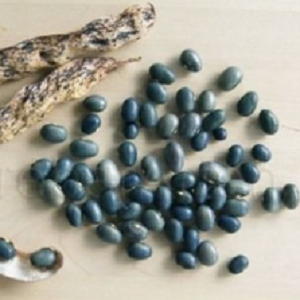
Pile of blue dry beans.

After several years of looking for a truly blue dry bean, I started actively working to produce my own variety in 2018 when I was gifted a few bluish-black hybrid seeds from a bean collector. At the end of 2022, I was essentially done. Five years of selecting the best blue seeds each season and my new variety finally produced a consistently blue crop.

There's probably still going to be a few more years of increasing the seed before I'm prepared to distribute them in some fashion. Along the way I'll be selecting for increased productivity and having to figure out where I can grow more of them each year.

Anthocyanin pathway diagram, emphasizing red and blue anthocyanins, as well as yellow astragalin.

Since harvesting the most recent crop, I've been digging into what research literature there is about the genetics and biology of color in beans. This was initially just to get a better idea of what was going on in my beans. Along the way I realized I could probably use the knowledge I had gained to intentionally make new blue varieties.


The initial random hybrid was between a black variety (Haudenosaunee Skunk) and a yellow-tan variety (Arikara Yellow). That color combination would clearly work as parents in a new cross, but I realized there was a combination of parental color genetics that would probably make it easier to recover the right combination of genes to produce a blue color.

The color of black beans is caused by a combination of red, blue, and yellow-brown pigments at high intensity. In Phaseolus vulgaris, a small number of genes lead to this color: R ("red"; likely a transcription factor driving enzyme F3'H), V ("violet"; enzyme F3'5'H), and then B ("brown"; transcription factors enhancing CHS/CHI, darkening all downstream pigments). A yellow-brown bean is caused by all three genes being inactive (written as "rvb"). There are a few other genes that seem to impact exactly what shade of brown color may result, but there doesn't seem to be as much clarity in the research literature about that part of the pigment pathway.

The difference between a purple and a black bean is that the purple bean has an inactive version of B (b). Crossing a purple bean (RVb) to a yellow bean (rvb), where both have the recessive inactive b allele, reduces the genetic possibilities in the F2s to only those impacting the red and blue pigments. Among the F2 plants, we should see the ratios of a dihybrid cross play out. 9 purples, 3 reds, 3 blues, and 1 yellow-brown. 3/16 isn't that bad and I can easily grow enough plants to expect to be able to find the blues I'm looking for.

At left, purple dry beans. At right, yellow dry beans.
To test this model I've been building, I decided maybe I could try to make a blue version of one of the other domesticated bean species. Most P. coccineus (runner or ayacote) beans I'd ever seen before were lilac and heavily spotted with black. After digging around for a while, I eventually ordered some mixed color packages from some Mexican bean importers in the south-west. Among those, I was able to select out seeds with the colors I was looking for.

While I was waiting for those to arrive, I was also looking for P. lunatus (lima) beans with the same colors. The yellow-brown variety I found is called Pima Orange. I ordered the purple variety from someone on Ebay and am still waiting for them to arrive.

I wasn't able to find any sign of a purple version of P. acutifolius (tepary) beans. I did find black and yellow versions that I could use with more difficulty. I'll keep looking for a purple version and may eventually decide to try using a black variety instead, but for now I'll hold off on trying to make a blue variety of this species.


The color of a seed is determined by the genes of the mother plant, so it can take some tricks to sort things out. The plan will take a few years to play out.

  • 2023 : Plant purple & yellow seeds on a common trellis. Some harvested seeds may be hybrids, but we can't identify them yet. Save them separated by color.
  • 2024 : Plant yellow seeds only. Save harvested seeds by color.
    • Yellow seeds : mother plant wasn't hybrid.
    • Purple seeds : mother plant was a hybrid between purple & yellow plants. These seeds will grow into F2 plants.
  • 2025 : Plant purple seeds only. Save harvested seeds by color.
    • The F2 plants should fall into four categories (9 purple : 3 red : 3 blue : 1 yellow). I've already determined I can grow F2 plants in a mass planting and observe the expected ratios in the cumulative produced seed counts.

P. coccineus and P. lunatus are strong out-crossers, so I can rely on bees and other pollinators to do the work of transferring pollen for me. The two species can't cross, so I can do both parallel experiments in a relatively small garden space. To increase the odds of the yellow seeds produced in 2023 being hybrids, I can plant many more purple seeds than yellow (or even only one yellow seed among many purple). This will result in most flowers that a yellow-seed plant can cross with being those from purple-seed plants.

If no purple seeds turn up in 2024, then no useful cross-pollinations happened in 2023. In 2025 I would then plant purple and yellow seeds to try and find crosses again. There may be some hybrid seeds among the purples, but distinguishing them from the non-hybrids would take a couple more years and require individual plants to be grown on separate trellises. That's more work than I want to put into it, hence designing the plan the way I have.


This plan assumes the genes driving F3'H (red anthocyanins) and F3'5'H (blue anthocyanins) are unlinked in these species. I know in P. vulgaris the two genes are not tightly linked. If they were, I would not expect to have been able to find the initial blue-seeded plant so easily as I did. That it is possible to make hybrids between P. vulgaris and P. coccineus tells us their genomes are organized in largely the same fashion, so the two genes should be similarly not tightly linked in P. coccineus. Making hybrids with P. lunatus is harder, but still possible, so similarly I don't expect the two genes to be tightly linked.

Why aren't there already blue varieties of these species available? I don't know, but I feel it might be the same reason that blue varieties of P. vulgaris are so very rare, whatever that is. That and the vast majority of people who have ever grown beans have not been geneticists backed up with decades of published research into the biology of bean pigments. In a few years, I hope to have remedied this absence.


References:
  1. Bean varieties:
    1. Haudenosaunee Skunk: https://exchange.seedsavers.org/page/variety/id/193592
    2. Arikara Yellow: https://www.seedsavers.org/arikara-yellow-bean
    3. Pima Orange : https://www.nativeseeds.org/products/pl011
    4. Black Tepary : https://www.nativeseeds.org/collections/tepary-beans/products/pt082
    5. S'oam Baw Tepary : https://www.nativeseeds.org/collections/tepary-beans/products/pt120
  2. Blog posts:
    1. https://the-biologist-is-in.blogspot.com/2018/10/the-color-of-beans-1.html
    2. https://the-biologist-is-in.blogspot.com/2022/12/the-color-of-beans-2.html
    3. https://the-biologist-is-in.blogspot.com/2023/01/the-color-of-beans-3.html
    4. https://the-biologist-is-in.blogspot.com/2023/02/the-color-of-beans-4.html
  3. Bean species hybrds:
    1. https://link.springer.com/article/10.1007/BF01902923
    2. https://www.semanticscholar.org/paper/Hybrid-plant-of-Phaseolus-vulgaris-L.-and-P.-L.-by-Kuboyama-Shintaku/c20048408e38632b8ae8fe45d234e967ad57df2d

Friday, February 10, 2023

The Color of Beans 4

In my last post (https://the-biologist-is-in.blogspot.com/2023/01/the-color-of-beans-3.html), I shared a couple figures illustrating the flavonoid/anthocyanin pigment pathway in plants and in common beans (Phaseolus vulgaris) specifically. A couple days later, I found some additional evidence which led me to feel the need to update my figures somewhat.


Starting section from the top: phenylalanine to cinnaminate to 4-coumerate to p-coumaroyl-CoA (+ 3x malonyl-CoA) to naringen chalcone to naringen. Naringen goes left and right to eriodictyol and pentahydroxy flavone. Eriodictyol goes left to flavan-4-ols and then to phlobaphenes (highlighted in red). Eriodictyol goes right to tricetin. Naringen goes right to apigentin (highlighte light brown). Pentahydroxy falvanone goes right to luteolin (highlighted pale yellow). Naringenin goes down to dihydrokaempferol. Eriodictyol and dihydrokaempferol go left to dihydroquercetin. Pentahydroxy flavanone and dihydrokaempferol go right to dihydromyricetin. Dihydroquercetin goes right to quercetin (highlighted in yellow). Dihydrokaempferol goes right to kaempferol (highlighted in yellow) and then down to astragalin (highlighted in yellow). Kaempferol goes to a series of question marks highlighted in a gradient from white to brown. Dihydromyricetin goes right to myricetin (highlighted light brown). Dihydroquercetin goes down to leuocyanidin. Dihydrokaempferol goes down to leucopelargonidin. Dihydromyricetin goes down to leucodelphinidin. Leucocyanidin goes down to cyanidin and then cyanin (both highlighted red). Leucopelargonidin goes down to pelargonidin and pelargonin (both highlighted orange). Leucodelphinidin goes down to delphinidin and delphinin (both highlighted blue). Leucocyanidin, leucopelargonidin, and leucodelphinidin go left to 2,3-trans-flaven-3-ols (catechin) (highlighted in in a gradient from white to brown). Cyanidin, pelargonidin, and delphinidin go left to 2,3-cis-flaven-3-ols (epecatechin) (highlighted in a gradient from white to brown). Catechin and epicatechin go down to proanthocyanidins (highlighted in a gradient from white to brown). Luteolin, apigenin, and tricetin have a group label 'flavones'. Myrictein, kaempferol, and quercetin have a group label 'flavonols'.  The figure has enzyme labels at most steps.  In the top starting section: PAL, C4H, 4CL, CHS, and CHI. Naringenin to eriodictyol is F3'H. Naringenin to pentahydroxy flavanone is F3'5'H. Eriodictyol, naringenin, and pentahydroxy flavanone to tricetin, apigenin, and luteolin are FNS. Eriodictyol, naringenin, and pentahydroxy flavanone to to dihydroquercetin, dihydrokaempferol, and dihydromyrecetin are F3'H. Eriodictyol to flavan-4-ols is DFR. Dihydrokaempferol to dihydroquercetin is F3'H. Dihydrokaemperol to dihydromyricetin is F3'5'H. Dihydroquercetin, dihydrokaempferol, and dihydromyricetin to quercetin, kaempferol, and myricetin are FLS. Dihydroquercetin, dihydrokaempferol, and dihydromyricetin to leucocyanidin, leucopelargonidin, and leucodelphindin are DFR. Leucocyanidin, leucopelargonidin, and leucodelphindin to cyanidin, pelargonidin, and delphinidin are ANS. Cyanidin, pelargonidin, and delphinidin to cyanin, pelargonin, and delphinin are GT. Leucocyanidin, leucopelargonidin, and leucodelphindin to catechin are LAR. Cyanidin, pelargonidin, and delphinidin to epicatechin are ANR.
Certain combinations of published genes lead to production of a brown pigment when an excess of yellow astragalin would be expected. Here I've made up an enzyme called FNR (FlavoNol Reductase) leading to production of the pigment, modeled after the production of proanthocyanidins by ANR (Anthocyanin Reductase).

The evidence for a brown pigment derived from the yellow pigment pathway comes from the gene B changing a bean color from yellow-brown to mineral/dark-brown when present. B is thought to be a transcription factor that enhances the expression of other pathway genes. Yellow can only arise when red and blue pigment branches are absent, so the brown pigment produced with B can't be the brown proanthocyanidins derived from the red and blue pigment branches. Instead it must be an analogous pigment produced from kaempferol and/or astragalin. I haven't found any research papers discussing this pigment pathway branch, but all the evidence seems to point to it being there anyhow.

This version of the flavonoid pigment pathway is trimmed to be limited to the main pigments (cyanidin, pelargonidin, delphinidin, & astragalin) along with the core of the pathway leading to them and the metabolites derived from them.
The figure trimmed to the metabolites and pigments significant in common beans... now includes pelargonidins. This version of the figure has different thickness arrows in places to illustrate when one branch has a higher priority, when one branch of metabolites is more likely than another.

Dihydrokaempferol is a central metabolite for all the different pigment branches in the pathway. F3'H and F3'5'H leading to red and blue pigments have the strongest branches, followed by FLS leading to yellow pigments, and then last is DFR leading to orange pigments. For the orange pigments to dominate the final color, it looks like the other three branches have to be disabled or significantly reduced.

pale tan beans with orange-toned eyes.
So. Are there orange varieties of common bean? Maybe. Instagram user @g3netic_lottery shared a mixed variety of beans they grew this year and some of them had a distinctly orange-ish color, especially in the hilium ring. Now, I'm not entirely sure that is the color of pelargonidin, but it is the closest to orange I've seen in common beans. It's enough of a suggestion that I decided to rework the pathway figure to include it for this species.

I still think it would be really cool to find (or breed up) a variety that had distinctly orange color all over the seed. These beans at right hint that it is feasible if one has the right sort of luck. @g3netic_lottery on Instagram grows beans and other crops in South Africa. I'll be keeping my eye out for useful seeds more accessible to me that might help me get to a nicely orange common bean.


The other domesticated bean species will have very similar pathways as the common bean, but the specific available mutations are going to be different. Maybe we can find a good pelargonidin orange color in one of them. I spent some time looking around for orange seeded varieties of the other species, with limited luck.

  • Runner beans (P. coccineus): This photo of "Ayacote Mexican" beans includes some very orange looking seeds, but I have no idea how much that reflects reality.
  • Lima beans (P. lunatus): "Pima Orange" has seeds that look yellow-brown or orange depending on the photo. Again, it is hard to say what they really look like.
  • Tepary beans (P. acutifolius) : There are some photos around of very orange tepary beans, but I can't find any varieties available for sale that look anything near orange.
  • Year-long beans (P. dumosus) : This species is interesting, but only grown in a limited area. I found several articles about it, but I have yet to find anyone selling seeds.
Mix of dark purple and black beans.
I ordered the runner and lima bean varieties above, so I can see what their colors actually look like. It is so very easy to intentionally or accidentally tweak the color of a photo, so the color of photos online isn't always something you should trust.

The runner beans turned up first. Unfortunately, there was nothing like orange among them. I did get the lovely dark purple beans at left though, which are perfect for another project I'll describe in another post. After further looking around, I found a different vendor selling ayacote beans that are at least advertised with some nice orange tones. As they too are selling the beans intended for food use, there's no guarantee any yellow seeds will turn up.

Mix of orange colored beans with variable dark markings.
The lima beans arrived a few days later. When I opened the package, I was greeted by seeds with a surprisingly nice orange color! Now, this isn't anything like the orange you get from beta-carotene in some carrots and tomatoes, but this might just be what a pelargonidin orange looks like.

Alternately, this could be a mix of a yellow and a brown pigment. There may be some simple basement-lab tests I can do to help me identify the pigment, but that will take some further research.

In either case, I think it is entirely reasonable to expect a similar orange colored common bean should be possible. It's just a matter of finding the right mutations and crossing them into the same plant.

References:

Friday, February 3, 2023

Potatoes

Two pale blue potato plant flowers.
Years ago I heard a story. The story teller's cousin has been growing potatoes and tomatoes each of the last several years. Some years, her cousin reported finding hybrid plants that produce edible potatoes and green tomatoes.

From the story, second-hand as it was, I imagined ripe-red tomatoes on a plant that when pulled up had mature potatoes hanging from the roots. There is usually some truth behind a story like this, but perhaps not what the originally teller or the later hearer initially thought.

The two species (tomato, Solanum lysopersicum; potato, S. tuberosum) are in the same genus, but are distantly related enough that they can't cross to form hybrids. Plants with the important traits of both species can be purchased or made at home, but they are the result of actively grafting separate plants together and wouldn't accidentally form in the garden.


Single potato plant stem with several leaves and two light purple flowers. Stems are dark purple.
As potatoes are in the same genus as tomatoes, they do produce fruit which is very similar to those of tomatoes. However, instead of being large and colorful, potato fruit are small and generally remain green. Most people who've grown potatoes have never seen the fruit because many commercial varieties rarely flower and even more rarely set fruit. Commercial varieties have been bred to not flower and/or produce fruit because that would take energy wasted that could otherwise be used to grow tubers.

The fruit are generally considered to be poisonous (due to high solanine content) like the other non-tuber parts of the plant. Solanine can usually be detected as a bitter taste, but sensitivity to it varies and people have been sickened or killed by consuming too much of it.

Professional potato breeders have been actively reducing the level of solanine in potatoes for decades. A side-effect of this selection process could be the reduction of solanine in the berries as well as the tubers, but nobody seems to have been researching this possibility.

The story teller's cousin could have been growing a potato variety that coincidentally had extra-low solanine levels in its fruit, or they could have a low sensitivity to solanine. Either way, they probably wouldn't have been able to collect enough fruit from the potato plants to be at risk of being in any real danger from the amount of solanine.

A weekend prior to when I first started writing this post, I gathered a batch of fruit from some Yukon Gold potato plants. I tasted one and found it mildly bitter. My mother in law tasted it and found it terribly bitter. We had sampled a similar amount of the fruit and so our different reactions likely reflect different abilities to taste the solanine.


Four small piles of small potatoes. At bottom-right is five red potatoes. At top-left is two larger brown/purple potatoes. At bottom-right is four dark purple potatoes. At top-right are four black potatoes.
I wouldn't advise eating the tomato-like berries to be found occasionally on potato plants, but they have other uses.
Potatoes are typically grown from seed potatoes (either saved from the previous year or bought anew from tissue-culture labs) and thus are genetic clones that will grow/produce very consistently from year to year. The true potato seeds (TPS), however, are the result of a cross- or self-pollination. The mixing up of the parents' genetics means every plant grown from true seed will be different.

As the only potatoes growing in the patch were Yukon Gold, the seeds in the gathered fruit likely represent the result of a self-pollination. Every plant that grows from TPS is instantly a new variety that can then be cloned by saving the tubers. Over a few years one could grow a significant number of new varieties from any given cross, in time developing an appreciation for the genetics that are found in the parent(s). Yukon Gold is a popular variety and others have already performed exactly this experiment. 

forum discussion about TPS about the likely results of growing seeds from Yukon Gold, written by Tom Wagner, a notable tomato and potato breeder:
I have been testing Yukon Gold OP berries for 25 years or more ever since the experimental clone was first accessed by me. In controlled self pollinated berries, as opposed to OP berries, I get a rather predictable segregation of types each time I grow out seedlings. If you grow out seedlings yourself enjoy the following:
  • whites with white flesh
  • whites with light yellow flesh
  • yellows with light yellow flesh
  • yellows with medium yellow flesh
  • yellows with deeper yellow flesh
  • repeat of above but with either light pink eyes/red eye
  • all of the above with templates of size, yield, shape, flavor, etc., differences.
Yukon Gold was selected from a cross between Norgleam (female) and W5279-4 (a yellow-fleshed diploid hybrid of S. phureja and haploid cv Katahdin). Yukon Gold is a tetraploid because of the unreduced gamete from it pollen parent.
Yukon Gold is a tetraploid with a complex parentage, potentially giving it a wide range of possible genetic combinations. That most of those possibilities seem to fall into a distinct set of combinations just means that for those visible traits there isn't that much diversity hiding inside the parent. If you want to play with intensely-colored tubers you would have to look elsewhere.

The really interesting thing about growing potatoes from TPS is all the minor variations in the plant that might impact production or how the plants grow. Over a few years one could select a variety perfectly-suited to the peculiar conditions of your garden, rather than hoping that the default clones available in the store will work for you. At least that's the theory, if you've got enough time and space to dedicate to the task.


Bowl of small tan potatoes with small purple marks.
A few years back I ordered some true potato seed from cultivariable.com to start experimenting with in my garden. Most of the seedlings each year have failed for one reason or another.

A few plants didn't produce a single tuber. Most of those that produced tubers got infected with what might have been late-blight (Phytophthora infestans). For my purposes, the specific disease didn't matter. Any with an obvious infection were discarded.

Of those that made it to harvest, some didn't survive winter storage. A very few didn't taste good. One tasted like fresh-mowed grass. (In retrospect, I wish I had kept that one for its prank value alone.) A few that made it through all those steps didn't manage to grow any tubers in the next year.

I did end up with a handful of varieties which seem to grow well enough in my environment, produce tubers that store well, and importantly also taste good. A selection of my varieties can be seen in the photos above. Some even ended up having very nice flowers, though one would never mistake the plants for garden flowers. This year I'm planning to grow a commercial type along side mine, to get a better sense for how well they produce vs the commercial control. Every year in the garden is a new experiment.


Friday, January 20, 2023

The Color of Beans 3

Diagram illustrating the flavone pigment pathway.

Starting section from the top: phenylalanine to cinnaminate to 4-coumerate to p-coumaroyl-CoA (+ 3x malonyl-CoA) to naringen chalcone to naringen. Naringen goes left and right to eriodictyol and pentahydroxy flavone. Eriodictyol goes left to flavan-4-ols and then to phlobaphenes (highlighted in red). Eriodictyol goes right to tricetin. Naringen goes right to apigentin (highlighte light brown). Pentahydroxy falvanone goes right to luteolin (highlighted pale yellow). Naringenin goes down to dihydrokaempferol. Eriodictyol and dihydrokaempferol go left to dihydroquercetin. Pentahydroxy flavanone and dihydrokaempferol go right to dihydromyricetin. Dihydroquercetin goes right to quercetin (highlighted in yellow). Dihydrokaempferol goes right to kaempferol (highlighted in yellow) and then down to atragalin (highlighted in yellow). Dihydromyricetin goes right to myricetin (highlighted light brown). Dihydroquercetin goes down to leuocyanidin. Dihydrokaempferol goes down to leucopelargonidin. Dihydromyricetin goes down to leucodelphinidin. Leucocyanidin goes down to cyanidin and then cyanin (both highlighted red). Leucopelargonidin goes down to pelargonidin and pelargonin (both highlighted orange). Leucodelphinidin goes down to delphinidin and delphinin (both highlighted blue). Leucocyanidin, leucopelargonidin, and leucodelphinidin go left to 2,3-trans-flaven-3-ols (catechin) (highlighted in in a gradient from white to brown). Cyanidin, pelargonidin, and delphinidin go left to 2,3-cis-flaven-3-ols (epecatechin) (highlighted in a gradient from white to brown). Catechin and epicatechin go down to proanthocyanidins (highlighted in a gradient from white to brown). Luteolin, apigenin, and tricetin have a group label 'flavones'. Myrictein, kaempferol, and quercetin have a group label 'flavonols'.

The figure has enzyme labels at most steps.

In the top starting section: PAL, C4H, 4CL, CHS, and CHI. Naringenin to eriodictyol is F3'H. Naringenin to pentahydroxy flavanone is F3'5'H. Eriodictyol, naringenin, and pentahydroxy flavanone to tricetin, apigenin, and luteolin are FNS. Eriodictyol, naringenin, and pentahydroxy flavanone to to dihydroquercetin, dihydrokaempferol, and dihydromyrecetin are F3'H. Eriodictyol to flavan-4-ols is DFR. Dihydrokaempferol to dihydroquercetin is F3'H. Dihydrokaemperol to dihydromyricetin is F3'5'H. Dihydroquercetin, dihydrokaempferol, and dihydromyricetin to quercetin, kaempferol, and myricetin are FLS. Dihydroquercetin, dihydrokaempferol, and dihydromyricetin to leucocyanidin, leucopelargonidin, and leucodelphindin are DFR. Leucocyanidin, leucopelargonidin, and leucodelphindin to cyanidin, pelargonidin, and delphinidin are ANS. Cyanidin, pelargonidin, and delphinidin to cyanin, pelargonin, and delphinin are GT. Leucocyanidin, leucopelargonidin, and leucodelphindin to catechin are LAR. Cyanidin, pelargonidin, and delphinidin to epicatechin are ANR.
A great deal of research has gone into our understanding of how colors are made in plants. I've previously written about the carotenoid pigment pathways in tomatoes [1] and peppers [2], condensing a great deal of published literature in the process. Until recently, I didn't have a solid grasp of the pathway plants use to make a second major category of pigments, the flavonoid pigments. These pigments are responsible for many of the red/purple/blue colors you see in flowers and other plant parts, but I've been learning about them through my focus on the various colors of dry beans.

The carotenoid pigment pathway I discussed in those earlier articles was relatively simple. A single main pathway, with a couple branches. The anthocyanin pathway figure at above-right is a bit more complicated. The figure is a consensus pathway, built from research in a few different species. There are definitely more pieces that could be added, but this amount is a good start. The colored highlights are intended to represent the colors of those chemicals. The lower red, orange, and blue pigments are anthocyanins, the pigments responsible for the color of many flowers (and other plant parts). The white-to-brown gradient highlight is for the proanthocyanidins. They oxidize over time, changing from clear to brown. The red pigment at upper-left is found in some trees, but I wasn't able to find too much information about them. The yellow pigments at right are found in various plants and plant parts, but they're not generally the source for bright yellows in flowers. (The enzyme FGT leading to astragalin at far right is something I made up, since I couldn't find any research naming the enzyme performing that step.)

Diagram illustrating the flavone pigment pathway as found in common dry beans.

Starting section from the top: phenylalanine to cinnaminate to 4-coumerate to p-coumaroyl-CoA (+ 3x malonyl-CoA) to naringen chalcone to naringen to dihydrokaempferol. Dihydrokaempferol goes left to dihydroquercetin and right to dihydromyricetin. Dihydroquercetin goes right to quercetin (highlighted in yellow). Dihydrokaempferol goes right to kaempferol (highlighted in yellow) and then down to atragalin (highlighted in yellow). Dihydromyricetin goes right to myricetin (highlighted light brown). Dihydroquercetin goes down to leuocyanidin. Dihydromyricetin goes down to leucodelphinidin. Leucocyanidin goes down to cyanidin and then cyanin (both highlighted red). Leucodelphinidin goes down to delphinidin and delphinin (both highlighted blue). Leucocyanidin and leucodelphinidin go left to 2,3-trans-flaven-3-ols (catechin) (highlighted in in a gradient from white to brown). Cyanidin and delphinidin go left to 2,3-cis-flaven-3-ols (epecatechin) (highlighted in a gradient from white to brown). Catechin and epicatechin go down to proanthocyanidins (highlighted in a gradient from white to brown). Myrictein, kaempferol, and quercetin have a group label 'flavonols'.

The figure has enzyme labels at most steps.

In the top starting section: PAL, C4H, 4CL, CHS, CHI, and F3H. Dihydrokaempferol to dihydroquercetin is F3'H. Dihydrokaemperol to dihydromyricetin is F3'5'H. Dihydroquercetin, dihydrokaempferol, and dihydromyricetin to quercetin, kaempferol, and myricetin are FLS. Dihydroquercetin and dihydromyricetin to leucocyanidin and leucodelphindin are DFR. Leucocyanidin and leucodelphindin to cyanidin and delphinidin are ANS. Cyanidin and delphinidin to cyanin and delphinin are GT. Leucocyanidin and leucodelphindin to catechin are LAR. Cyanidin and delphinidin to epicatechin are ANR.
At left is a heavily reduced version of the first figure, trimmed to an approximation of what seems to be going on in common beans (Phaseolus vulgaris). Combinations of the yellow, red, blue, and brown pigments seem to be responsible for most of the variations in color that we see in dry beans. I've seen some evidence for a brown pigment derived from the yellow ones here, but I haven't found any research clarifying the chemistry involved. There's the possibility of some green pigments made up from a different metabolic pathway, but I haven't found sufficient research about them to know if they're represented in beans.
Various of the trimmed compounds are also found in common beans, but they don't seem to be found in significant amounts. The orange pelargonidin pigments have been reported in some bean varieties, but I've never come across a common bean that has a color dominated by orange pigment. There might be orange examples from P. coccineus, the scarlet runner bean, but I'm still investigating this.


The colors of beans drew attention far before we had any understanding of the physiology of the pigments involved. Much of the early published research into bean colors sought to identify different genes responsible for the traits. Eventually the gene labels assigned by different authors got correlated with each other and the set of labels for important color genes became standardized. Even more recently, there have been efforts to identify the molecular mechanism behind the different classical gene labels. Some gene labels are now associated with specific enzymes or other genes important in the flavonoid pathway.

  • R [red] : Enzyme F3'H, or more likely a transcription factor driving F3'H in the seed coat. F3'H is important for stress response in plant tissues and so is unlikely to be absent even when the enzyme isn't active in the pathway.
  • V [violet] : Enzyme F3'5'H. This one isn't as important as F3'H and is entirely absent in many plants.
  • J : Pretty solidly identified as the enzyme DFR.
  • P : A transcription factor driving expression of several genes important in the flavonoid pathway. In the figures above, the regulated enzyme targets are drawn in blue.
  • B : A transcription factor driving expression of chalcone synthase (CHS) and/or chalcone isomerase (CHI).
  • G : A transcription factor leading to increased levels of astragalin, perhaps by driving expression of FLS and/or FGT. Likely has other impacts, but I haven't found sufficient research.

Tracking down which gene was associated with which step in the pathway was tricky. Many of the older papers had models for what a given gene did, but then those models were overturned by more recent research. The paper identifying V as being the gene for the enzyme F3'5'H was only published in March 2022. Finding that paper got me interesting in trying to see how many of the others could also be associated with a specific part of the pathway. The other gene notes above came from the scattered papers linked in the references section, though few were specifically the point of the papers.

My goal was to better understand what the gene labels were doing, so I could better figure out what genes were likely to be involved in the beans I was growing and crossing. I'll write more on that another time.


References
  1. Related blog posts:
    1. https://the-biologist-is-in.blogspot.com/2014/04/the-color-of-tomatoes.html
      • Carotenoid pigments in tomatoes.
    2. https://the-biologist-is-in.blogspot.com/2015/11/the-color-of-peppers-2.html
      • Carotenoid pigments in peppers.
    3. https://the-biologist-is-in.blogspot.com/2018/10/the-color-of-beans-1.html
      • Introduction of my #BlueBeanProject.
    4. https://the-biologist-is-in.blogspot.com/2022/12/the-color-of-beans-2.html
      • Status update of my #BlueBeanProject.
    5. https://the-biologist-is-in.blogspot.com/2019/11/biology-of-blue.html
      • Discussions around the chemistry of blue in biology.
  2. Papers related to anthocyanin pathway in bean, cotton, etc:
    1. http://arsftfbean.uprm.edu/bic/wp-content/uploads/2018/04/ChemistrySeedCoatColor.pdf
    2. https://nph.onlinelibrary.wiley.com/doi/full/10.1002/ppp3.10132
    3. https://www.ncbi.nlm.nih.gov/pmc/articles/PMC3602603/
    4. https://link.springer.com/article/10.1007/s11738-011-0858-x
    5. https://pubmed.ncbi.nlm.nih.gov/28981784/
    6. https://bmcplantbiol.biomedcentral.com/articles/10.1186/s12870-019-2065-7
    7. https://pubmed.ncbi.nlm.nih.gov/35289870/
    8. https://squashpractice.com/2011/10/08/bean-genes/
    9. https://journals.ashs.org/jashs/view/journals/jashs/124/5/article-p514.xml
    10. https://www.frontiersin.org/articles/10.3389/fpls.2022.869582/full#ref33
    11. https://journals.ashs.org/downloadpdf/journals/jashs/120/6/article-p896.pdf
    12. https://journals.ashs.org/downloadpdf/journals/jashs/125/1/article-p52.pdf
    13. https://www.semanticscholar.org/paper/Allelism-Found-between-Two-Common-Bean-Genes%2C-Hilum-Bassett-Shearon/f9cef3175289b7d2822461b9d495d8885bb67a48
    14. https://www.semanticscholar.org/paper/Inheritance-of-Reverse-Margo-Seedcoat-Pattern-and-J-Bassett-Lee/7557538290b700d1fd980a24fba3148846861690
    15. https://www.semanticscholar.org/paper/The-Margo-%28mar%29-Seedcoat-Color-Gene-Is-a-Synonym-%28-Bassett/d1c58ec1fa0bf9e500d8bd48364a61568b0b7a11
    16. https://naldc.nal.usda.gov/catalog/IND92036951

Friday, January 13, 2023

The Color of Pineapple

Clear glas bowl filled with chunks of cut pink pineapple. The pineapple we all grew up with is a bright yellow color. The pineapples of today isn't necessarily the same shade. Del Monte is now selling a variety with a distinctly pink flesh, called PinkGlowTM or Rosé pineapple. This is a bio-engineered variety, first conceptualized way back in 2005. A patent for the variety was issued in 2012 and the US FDA deregulated the variety in 2016, deciding the variety was essentially the same as other varieties with regards to safety and regulatory concerns.
The variety started as an extra sweet variety grown in Hawaii called MD2. This pink version shares the extra sweet and low acid traits of that original variety. I think it is a worthwhile product, even though (in my limited experience) most people's reactions to seeing the pink cut pieces at left was to think they looked like pieces of meat.


Figure depicting the carotenoid biosynthesis pathway in plants. Starting at top: Acetyl-CoA -> Isopentyl pyrophosphate -> Geranyl pyrophosphate -> Farnesyl pyrophosphate -> Geranylgeranyl pyrophosphate -> Phytoene. An arrow also goes from Geranylgeranyl pyrophosphate to Phytol -> Chlorophyll ->->-> Un-colored metabolites. From Phytoene -> Phytofluene -> Ksi-carotene -> Neurosporene -> Prolycopene -> Lycopene -> Delta-carotene -> Alpha-carotene -> Lutein. A second branch from Lycopene -> Gamma-carotene -> Beta-carotene -> Beta-cryptoxanthin -> Zeaxanthin -> Antheraxanthin -> Violaxanthin -> Xanthoxin -> Abscisic Acid aldehyde -> Abscisic acid. A side brance from Gamma-carotene -> Torulene. A side brance from Violaxanthin -> Neoxanthin -> Xanthoxin (already in the pathway described). The patent is a bit of a pain to read, as they generally are. The "DETAILED DESCRIPTION OF THE INVENTION" section is where they describe the details of the alterations they made.

A figure representing part of the carotenoid pathway described in the previous image. A larger arrow goes from Geranylgeranyl pyrophosphate to Phytoene. A large X covers each arrow leading away from Lycopene. At left is a sketch of the carotenoid pathway in pineapples. There is limited published information about the specifics of the pathway in pineapple, so this diagram was constructed from more general research in tomatoes, peppers, and other species. At right is a closeup of the pathway altered to illustrate the changes that were made in the pink pineapple, as described in the patent.

The first modification was to introduce a second copy of the phytoene synthase gene, driving increased amounts of metabolic energy through the carotenoid pathway. This is represented in the figure by a larger arrow at the top. The added gene was combined with a pineapple fruit flesh specific promotor, so the rest of the plant doesn't have its carotenoid pathway messed around with.

The second modification was to shut down two enzymes, lycopene beta-cyclase and lycopene epsilon-cyclase, normally responsible for converting lycopene into the next steps in the two branches of the carotenoid pathway after lycopene. The consequence of this is all the metabolic energy passing through the pathway is stopped at lycopene. Shutting down these genes was performed by RNA interference (RNAi), also driven by a copy of the same fruit flesh specific promotor. Again, this prevents the modification from interfering with the carotenoid pathway elsewhere in the pineapple plant.

The carotenoid pathway is important for a plant's stress response and other systems. It is likely a pineapple plant would survive more dramatic alterations to the carotenoid pathway that impacted the entire plant, but doing so would throw off the existing balance. The efforts they've taken to limit the pathway tweaks to only happen within the fruit flesh were important to ensure the plants generally are as productive and healthy as the pineapple they started with.


A third modification was atempted, but how the patent is written indicates they're not exactly sure the alteration worked. Commercial pineapple production relies on precision planning. To get a pineapple crop to mature at a specific planned time, the plants are treated with a hormone which induces flowering. In pineapple, the hormone that triggers flowering is the simple gas ethylene. Either ethylene or the similar shaped molecule acetylene is used to induce a crop to start blooming at a specific time. The problem is, pineapple plants will initiate blooming all on their own, when the growers may not want the plants to do so. This is called "natural flowering" and interferes with the plans of the growers.

So, to try and reduce the rate of natural flowering, the third modification was to try and supress the ACC synthase gene important for normal ethylene biosynthesis. They again used RNAi for this, targeted to growing meristems where the gene enzyme activity is important for normal flower induction. I suspect the reason the patent expresses uncertainty about this modification working is because at the time of patent filing, they didn't have enough experience with growing the new pineapple in field conditions to be able to see a reduction in the rate of natural flowering. By now they'll know for sure if it worked.

References:
  1. Marketing piece: https://specialtyproduce.com/produce/Pinkglow_Pineapple_17105.php
  2. Patent: https://patents.google.com/patent/USPP25763
  3. FDA statement: https://www.fda.gov/food/cfsan-constituent-updates/fda-concludes-consultation-pink-flesh-pineapple
  4. Carotenoids in tomatoes: https://the-biologist-is-in.blogspot.com/2014/04/the-color-of-tomatoes.html
  5. Carotenoids in peppers: https://the-biologist-is-in.blogspot.com/2015/11/the-color-of-peppers-2.html
  6. Pineapple flower induction: https://www.echocommunity.org/resources/f0e9cfeb-ba1d-435e-a515-7705ca79b409

Friday, December 30, 2022

The Color of Beans 2

A few years back I wrote a short post to introduced a project I had started to breed up a nicely blue colored dry bean. 

https://the-biologist-is-in.blogspot.com/2018/10/the-color-of-beans-1.html

The project as been moving forward nicely since then. This year's crop was very consistently blue in color, the first time I didn't harvest a large fraction of tan/blue seeds as well.

Dry beans in mixed colors. Browns, blues, and dark greys.
The picture at left looks very similar to the one I included in the post linked above, but this photo is from a few days ago. These beans are the extras I had saved from earlier generations, including many from 2018. This tells me the best blue colored seeds are able to maintain their color well in long-term storage.

The other truly blue varieties I have come across all seem to darken towards brown during storage. "San Berdardo Blue" and the rarer "Pragerhof" beans both have a nice blue color at harvest, but that color doesn't last. My blues keeping their color for a few years in storage is a nice improvement.

Over the first several years, I selected the best blue colored seeds from each harvest to plant the following spring. Until this year's harvest, each year I kept finding brown/tan seeds. This tells me the brown color was due to recessive alleles, which means it can be very hard to filter out the brown-seed trait. Any given blue seed could be hiding the recessive brown color allele.

Dark blue dry beans.
This year I was lucky and the entire harvest had the rich blue color I had been working towards. The recessive allele for brown color could still be hiding among these. I won't be more certain I have finished filtering out that trait for at least a couple more years, but I am hopeful. Because I didn't have to select on color this year, I instead selected for larger seed size and pods (or pod clusters) with more seeds in them.

Right now I am working to figure out how I can distribute this new variety, but it may not happen this year. I have very limited seed stock and any method of selling or distributing them comes with some significant costs.

You can find more about these beans with the tag #BlueBeanProject on various social media systems. I'll also be writing more posts here, so stay tuned.


Eleven pale blue bean seeds, each with a black ring around the hilium.Five dark blue bean seeds with tan speckles.I also have a couple new blue lines, unrelated to those above. These samples are F2s from a cross between "Pragerhof" and an unknown black bean.

One blue is darker than my main line and the other is lighter. I don't know for sure what these will become during the several years it will take to stabilize their genetics, but I aim to find out!

References:

Thursday, May 20, 2021

Viable Interspecific Eggplant Hybrids

The last year has been a mess. I'm fine. My family is fine. Most of my friends are fine. The increased anxiety and stress basically shut off any motivation or ability I had to write posts here. I was still active over on twitter or instagram, as those require less focused thought, but I just couldn't will myself to sit down at a computer and type up anything I felt was worthwhile to post.

I'm now fully vaccinated against covid19, but I know there are many people who still have not been able to access a vaccine. Some in my family. Many in the broader community. Covid cases in my community are dropping, but they're still higher than the peak we had in May of last year. I worry about recent CDC guidance and how people broadly seem to think it means the pandemic is over. It is not. Not here, and not elsewhere.

For now, most people locally seem to still be keeping up distancing and masking practices gained over the last year. As always, the next few weeks will be informative.

Even with the persistent writer's block, I routinely thought about writing something. This post is the first something to come of that. It isn't really the long and information or photo rich posts I like to write, but it is what it is


My plant breeding projects have continued without interruption. My gardens have provided me with useful exercise and amusement.

Most of my plant breeding projects start with hybrids between divergent varieties within one species. The F1 generally stands out from the two parental lines, so Iit is fairly easy to have confidence that the cross took. In the F2 generation, there are almost always useful and unexpected traits which segregates out.

Last year I grew out a F2 population of scarlet eggplant. Every plant was different, but two stood out. One was extra productive and ripened fruit far earlier than any others. The other developed fruit that were white when immature, but ripened to the typical red later. This season I have F3 populations from those two plants.

I still haven't figured out how to like eating eggplant, especially the more bitter flavors of the scarlet eggplant, but I like the plants and will continue to try.

Recently I found some references describing successful hybrids between the scarlet eggplant (Solanum aethiopicum) and more common purple eggplant (S. melongena), with some significant effort in the lab. This got me thinking about what species one could make hybrids with among the eggplant. Any such hybrids would allow for much more diverse F2 populations, with their higher potential for selection towards interesting new traits.

This led to some discussion about primary (1'), secondary (2'), and tertiary (3') germplasm. 1' germplasm includes plants in the same or related species which can cross readily to your subject species. 2' germplasm includes plants which can cross to your subject species with significant reduction in fertility. 3' germplasm is then plants that can cross with your subject only with intensive laboratory operations such as embryo rescue or induced genome duplication.

In the case of eggplants, there has been much more exploration of 2' and 3' germplasm for the common eggplant. The scarlet eggplant is an important crop for many communities, but it has not attracted as much attention in communities with higher levels of biological research investment. As such, the 2' and 3' germplasm lists below for scarlet eggplant are very much incomplete.

 Asian Eggplant (Solanum melongena)

  1. primary: S. incanum and S. insanum.
  2. secondary: S. anguivi, S. dasyphyllum, S. lichtensteinii, S. linnaeanum, S. pyracanthos, S. tomentosum, and S. violaceum.
  3. tertiary: S. elaeagnifolium, S. sisymbriifolium, S. torvum, and S. aethiopicum.

Scarlet Eggplant (Solanum aethiopicum)

  1. primary: S. anguivi, S. macrocarpon, and S. dasyphyllum
  2. secondary:
  3. tertiary: S. melongena.

Professional plant breeders pursue traits from related species like these to improve disease resistance, drought resistance, or other traits important to growing large crops.

Independent plant breeders can afford to use traits from related species (among the 1' and 2' germplasm resources at least) to express their creativity towards developing new varieties. Even if you're not sure what to do with them (as I am), they're still lovely plants which might be fun to work with in the garden.

I hope you are and remain well as the pandemic continues.


References