// Twitter Cards // Prexisting Head The Biologist Is In: seeds
Showing posts with label seeds. Show all posts

Monday, December 17, 2018

Seed Banks

The largest seed collections are multi-national affairs, backing up national seed collections for large numbers of crop varieties and wild species.
Svalbard Global Seed Vault. The Svalbard global seed vault is designed as a backup for national seed banks. It protects crop biodiversity against regional (and potential global) catastrophes of natural or man-made origin. The facility is protected from many problems that can impact national seed banks by its extreme isolation. Dug into a mountain on an island well north of the Arctic circle, the extreme persistent cold helps to preserve the seeds stored there even with complete power failure. Nations retain ownership of the seeds they store in the global vault. After some event has damaged their local seed banks (or whenever they choose), they can request their seeds back from the vault. Nobody else is given access to the seeds unless the owning nation allows it.
Millennium Seed Bank Partnership. This organization has the goal of banking seeds from 25% of the world's bankable wild species. (Some plant species produce seeds that can't be preserved in a dry state. These have to be preserved through active growth instead of banking.) They focus on species from mountain, dryland, coastal, and island environments that are the most vulnerable to climate change. They also focus on wild relatives of crop species. Their seed collection is used for research, for conservation/restoration projects, and as a back-up for local seed banks (much like Svalbard).
Their overall goal is preservation. Stored crop varieties and species will be maintained (usually in cold storage) in their current form, skipping through time without experiencing any evolutionary changes.


On a smaller scale are local seed lending libraries. Such a library operates by providing seed to members of their local community at the start of the year, then receiving seeds back from those gardeners (that had success) for distribution in the next year. Some growers will ensure their plants are isolated and produce "pure" selfed seed to return to the library. Other growers won't realize they might need to do anything and will occasionally produce hybridized seed to return to the library. Over the scale of many years, the plants that grow from these seeds will be continuously changing. They will be adapting to the local environment and the tastes/favors of the growers contributing seeds back to the library.

Though such a localized variety may have always had the (hypothetical) name "Tomato Alpha", it will be a distinct variety from the "Tomato Alpha" that has been preserved in the seed banks. The common name being applied to what have become multiple different localized varieties will lead to confusion that makes it difficult for people to know what seeds they've received. (This sort of confusion is now seen in tomatoes called "Brandywine".)

Seed lending libraries can't effectively keep an eye out for hybrids (or mistaken identity) in their seeds (nor should they, as this is necessary for developing localized varieties), but they can minimize confusion by ensuring their name is attached to every seed they distribute. "Tomato Alpha, library #1 strain" will be distinct from "Tomato Alpha, library #2 strain" or "Tomato Alpha" (from a seed bank).


Part of my seed-saving philosophy says it is very important for people to save seeds from the plants they grow because it will put incorporate their goals and desires into the future of the plant. This is well captured by the seed lending libraries. I also appreciate the importance of preserving varieties the way the seed banks do because it maintains genetic diversity which can otherwise be easily lost. So, what should we do about the issue of single names coming to refer to multiple varieties?

My personal seed library includes seeds from a variety of sources. I record the variety names for seed that I buy and I'll continue to use the name for seeds I've saved as long as the plants match what the variety is supposed to be. I actively look for hybrids in my garden. If they're interesting, I'll save seeds from them, and then from some of their progeny (etc.). None of these seeds belong to the starting variety, so they get labeled with a description of what the mother plant looked like (since I don't know the daddy) as well as if I know they're F1, F2, etc. Eventually over a several seasons I'll get a better idea of what I want them to be. At the same time their genetics will be stabilizing as they get a better idea of what they want themselves to be. Eventually we'll come to some sort of agreement. I might give them a name at that point, or I might just wait until they tell me what their name is. It might take a while.


References:

Tuesday, December 6, 2016

Unstable Genetics

Collecting germplasm is a key step for any plant breeding project. For the amateur plant breeder, this can seem like an arduous task. Fortunately, you can take a quick shortcut by saving seeds from hybrid plants. A hybrid plant will be heterozygous for many alleles, because it was made by crossing two (more or less) unrelated plants. The seeds produced by a hybrid will be segregating out a diverse set of different combinations of the alleles.

Growing these seeds means you may get some plants that are simply worthless, or wonderful in your eyes. Farmers (or others wanting a precise and predictable crop) won't generally accept this uncertainty. (This is probably why there is so much online dismissing the idea of saving seeds from hybrids.) However, if you're ok with each plant being unique and changing from year to year, this may be exactly the sort of thing you're looking for.

Some small plant breeders sell seeds from the unstable early stages of their breeding projects. The good ones will be entirely clear about the unstable nature of the seeds they're selling. The bad ones won't even let you know there is an issue. I have no connection to the breeders I've linked to below, but they seem to be up-front about how their seeds are not a stable end-product of a breeding program. Their seeds should give you plenty of variation to work with.

Seed sources have been periodically updated since first posting:
This company is closing soon!!!

If you know of any other vendors offering similar seeds, please let me know!


References:

Tuesday, June 7, 2016

Pinecone Motility

Recently, I carried a found pine-cone into my work and set it on my desk. After a couple days, I noticed how much it had changed shape after drying. The cone was elongated and tightly closed when fresh. After drying, it was short and had its scales opened in a way that made it readily sit upright on its end.

I decided to do an observational experiment. I went and retrieved two more fresh pine-cones and set them at my desk, where I could watch them dry as I worked. Upon arriving at work the second day, one of the cones was sitting on its end. The second cone was mostly open and was on its side. I assumed that nobody had been messing with my desk and that the first cone had righted itself, but was annoyed I had missed the action. Around 3pm, while I was looking at the computer monitor above the pine cones, the second cone rolled over and righted itself. (Ah hah! I caught you!)

Pine cone cut in half, showing cut face.
Closed pinecone in cross-section.
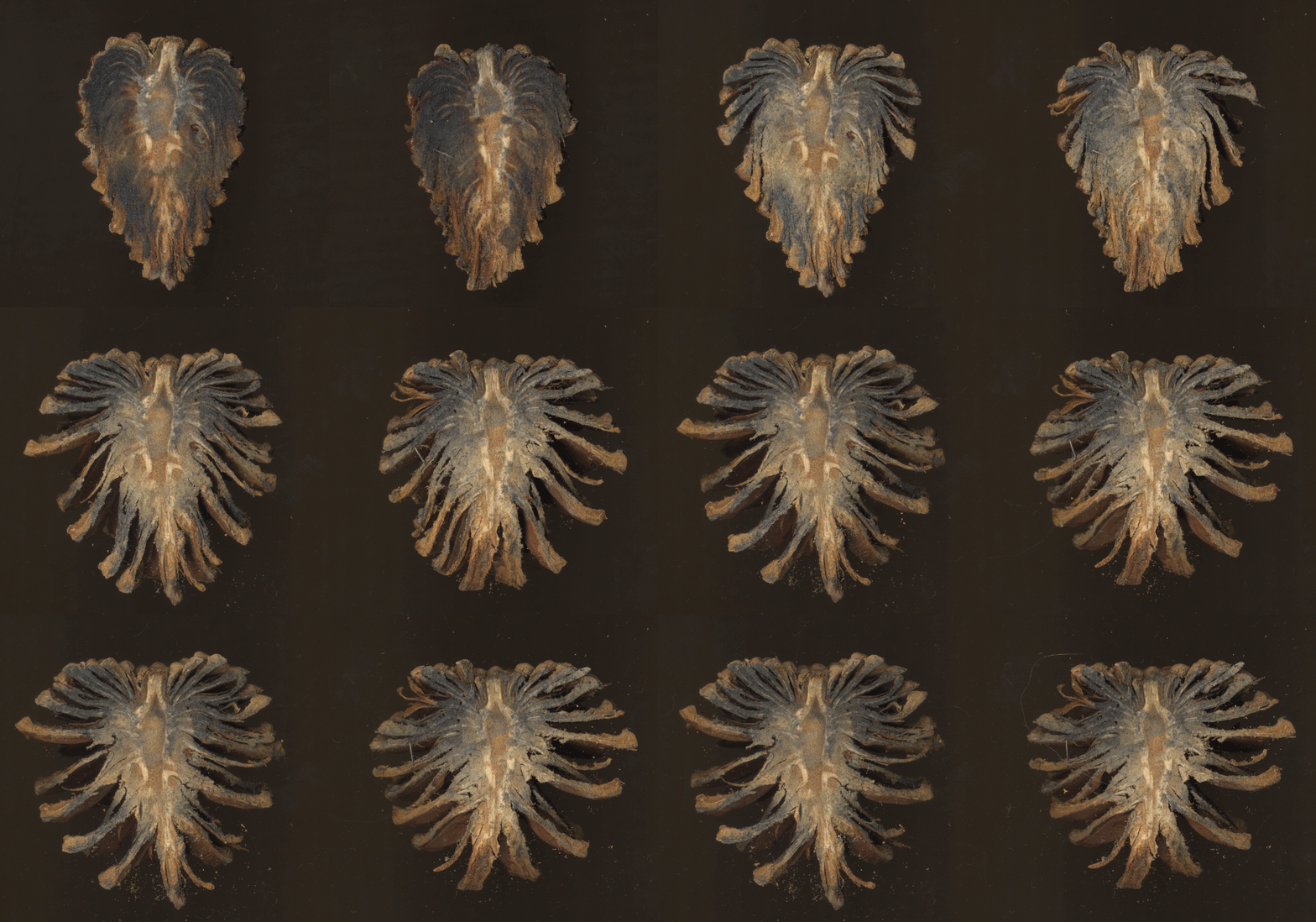
Now that I know for certain these pine-cones can right themselves, I decided to make a proper time-lapse of a cone as it dried to try and determine how they can do this. I soaked one of the dry cones in water overnight to get it to close up again, then I cut it in half length-wise (with a flat plunge-cutting oscillating tool) and placed the two halves on a flatbed scanner. The cut surface of the cone [at left] was slightly charred while cutting, but this shouldn't be a problem for the experiment.

I wrote up a script to control the scanner, automating it to take one image every hour for up to four days. From the resulting images, I constructed the animation shown below. The flat surface of the halved cone kept it from moving around [too much] as it dried.

The images could hypothetically be used to calculate how the center-of-mass changed as the pinecone dried and thus concisely describe why the pinecones rolled onto their ends. Even without any actual calculations, it is apparent from the animation that the center-of-mass is shifting towards the stem-end during the drying process. (Each scale carries its mass stemwards as it dries, thus the cumulative center-of-mass shifts stemwards as the pinecone dries.) At some point, the center-of-mass shifted past the tipping point and the pinecones rolled over on their end.

Time-lapse of drying pinecone in cross-section. Pinecone goes from fully closed to fully open.
100 hour time-lapse of drying pinecone halves.

Something is evident in the animation that I wasn't expecting. Towards the end of the sequence, the animation seems to stall a couple of times as well as move backwards a bit at the very end. We were having a very humid couple of days during the time-lapse and this interfered with the final drying of the pinecone. If I do another time-lapse, I'll have to have it stretch over a longer time-span than the 100 hours I used for this one.

Several pinecones scattered under the tree. Eight are resting upright, four are resting on their sides.
Pinecones, upright and laying down.
I don't expect this will happen with every type of pinecone, but it seems to happen routinely with the pinecones produced by this tree. I took a picture of the ground beneath the tree. Of the twelve pinecones in the frame, eight are more-or-less upright. This is a much higher percentage than I would have expected from simple random falls. I didn't do an exhaustive survey of all the pinecones under this tree, but the photo is basically representative of what I saw. With the previous experiments showing the cones can right themselves during drying... it isn't unreasonable to infer that (across wet and dry spells) the pinecones in this photo have been reorienting themselves to point upwards after their random orientations upon falling from the tree.

What benefit might the tree get in having its pinecones reorient themselves? Maybe the winged seeds are spread better by the wind from upright pinecones. I really don't know. I do know I'm not planning to do the experiments needed to come to a conclusive answer to the question. I'm also pretty sure this behavior isn't seen in the pinecones produced by all types of pine trees, so it is likely a behavior that evolved under selection (even if the behavior is incidental to selection on the pinecone shape for unrelated reasons).

Thursday, January 29, 2015

The Trouble with Seeds (3/3)

For someone interested in breeding plants, that some plants often don't produce seeds can be a major barrier. A breeder would be limited to looking for selectable mutations, rather than using the more general mixing and segregation of genetics to increase crop diversity.

Many of our common vegetables, fruits, and landscape plants are traditionally propagated by clonal divisions. In some cases (apples, pears, etc.) the complex genetic diversity of the crop means that every seedling would produce a distinct plant. The market demands for consistent production then encourage growers to clone the plants. In other cases, the clonal tradition is enforced by the plants themselves due to their inability to produce seeds. There's also a third category of plants which have such long life-cycles that breeding projects become prohibitive.

Researchers have figured out tricks to get seed and allow breeding to be done with plants that might otherwise prefer not to.

The Trouble with Seeds (1/3): Garlic, Horseradish, Potato Onion, Walking Onion, and Banana.
The Trouble with Seeds (2/3): Pineapple, Lily of the Valley, Potato, and Sweet Potato.
The Trouble with Seeds (3/3): Babington's Leek, Crosnes, and Bur Oak.

Most of this post is an accumulation of information from other sources (in colored quotes below) about how to get seeds from these crops. I've also included my thoughts and experiences where I felt something needed to be clarified or extended.


How to get Babington's leeks (Allium ampeloprasum var. babingtonii) to set seed.

Many alliums have forms which produce clonal bulbils in the flower head along with some flowers, but generally don't produce any viable seed. Research in garlic (A. sativum) has shown that you can often get seeds to mature if you extract the bulbils from the flower head at an early stage. The bulbils seem to draw nutrients away from the flowers and cause them to age too quickly for seeds to mature. When the bulbils are removed, the few flowers then get sufficient energy to grow and mature seeds. This process will probably work for Babington's leaks, or any other allium which produces bulbils and no seeds.


How to get Crosnes (Stachys affinis) to set seed.
[1] "Stachys palustris performed much better here than S. affinis this year - larger tubers, greater yields, no difference in flavor that I can detect. I've never grown either one before. Both set some seed, which is apparently common for S. palustris but not S. affinis. I wonder if I got some crossing."
If S. palustris shows self-incompatibility, the clonal Crosnes will generally fail to set seed. The plants would then be desperate for usable pollen, even from related species, in order to set seed. If they're crossed, the plants that grow from any of those seeds should be highly homogeneous, but distinct from either parent.
  1. alanbishop.proboards.com/thread/4973/stachys-affinis?page=2#ixzz3PznHBzAA


How to get Bur Oak (Quercus macrocarpus) to set seed, when very young.

Bur Oak trees can live for hundreds of years and generally don't start fruiting until they're 35+ years old. The wild trees produce very large acorns that are relatively sweet, requiring minimal processing to use as a food item. Domestication efforts could readily convert the species into a useful nut crop, but the long life cycle means it will generally have to be considered an intergenerational project.

Grafting methods are routinely used to increase fruit production or control the growth of fruit trees. Such grafting methods might also be applied to the Bur Oaks. When a host oak tree goes into bloom, the hormonal signals flowing through its sap will encourage the grafted Bur Oak to also go into bloom. There are numerous shrub oak species (Q. cornelius-mulleriQ. dumosaQ. durataQ. palmeriQ. sadlerianaQ. turbinellaQ. vaccinifolia, or Q. wislizeni) that mature much younger than the Bur Oak. One of these might be ideal as a host for grafted seedlings. The shorter life of the host oak would mean that you could plant as many as you need to host whatever number of Bur Oak seedlings you're working with. This process should shorten the 35+ year breeding cycle of the Bur Oak down to 2-3 years, making it a much more reasonable project to take on.


Most of the lovely plant diagrams in this post were derived from public-domain images hosted at botanicalillustrations.org. Some other diagrams are public-domain images from the same era that I found via google. I chose the original images which depicted the plants under discussion in the way I appreciated and then did some coloring or color correction using my favorite image editor (GIMP)

Friday, September 12, 2014

My Seed Archive

A central concept in my gardening philosophy is that anyone who grows plants from seed should save seeds, rather than just buy more seeds to grow the next year. It really doesn't take much effort to save seeds from some garden favorites, like tomatoes and peppers, and in doing so you will be ensuring that your favorite varieties of vegetables remain available as well as developing a stronger connection to your food.

I've written on this topic before, so this time I will go a different direction.

I like seeds.

They're small, come in interesting shapes/colors, and embody the potential for future growth. Most of the seeds I've collected are for edible (even if only marginally so) plants, so the seeds also represent potential future meals for myself and those I care about.

Over the years, my seed archive has grown from a few seed packets to the volume of nearly two cubic feet it now occupies. This volume includes hundreds of distinct seed samples, spread across over 130 species.

I usually have specific plans for the seeds I collect...
  • The rose (Rosa spp.) seeds are for a project to breed one which produces large fruit.
  • The squash (Curcurbita spp.) seeds are for a project examining the genetics of fruit shape.
  • The melon (Cucumis melo) seeds are for a project to breed single-serving sized melons.
  • The tomato (Solanum lycopersicum) seeds are for a project to breed interesting shapes/colors into micro (~6in tall) tomato plants like "Tiny Tim".
  • The pepper (Capsicum spp.) seeds are for a project to combine different interesting shape traits into one plant.
  • The carrot (Daucus carota) seeds are for a project to breed some locally adapted carrots for my garden.
  • The cotton (Gossypium spp.) seeds are for a project to develop colored-cottons that can be raised in Minnesota.
  • The California radish (Rhaphanus sativus-x-raphanistrum) are interesting because it is a recently evolved species (<100 years), while the sea radish (Rhaphanus maritimus) interests me as a potential new food plant because of its succulent leaves.
  • Various weedy species (Alliaria petiolataArctium lappaCarduus nutansSolanum dulcamaraS. nigrum) interest me as targets for UV-mutagenesis in order to generate  selectable variations useful in  domesticating the species for garden/food use.
  • Some are pretty flowers for my yard (Baptissa australisChamaecrista fasiculataDatura inoxiaVerbascum thapsus).
  • Some are for the woodland garden (Actaea pachypodaArisaema triphyllum).
  • Some are just plants that I find interesting (Abutilon theophrastiCarnegia giganteaGymnocladus dioicus).
  • There's also the seeds that aren't on this list, because I don't know what they are. I collected them so I could later grow them up and identify the plant which produced them.
…though, sometimes I gather seeds simply because they look interesting.


Since I recently moved into a new property, with a nice large yard, I decided that it was about time for me to make a full accounting of what was in my seed archive so I could begin sketching out garden ideas. The list below represents the large majority of what I found.

There's a few bulbs/tubers/etc. in the following list. Even though they aren't seeds, they do fit the theme of small things that can grow into bigger things that make food or are otherwise interesting…  so, I'm going to let them stay.


Friday, August 1, 2014

The Trouble with Seeds (2/3)

For someone interested in breeding plants, that some plants often don't produce seeds can be a major barrier. A breeder would be limited to looking for selectable mutations, rather than using the more general mixing and segregation of genetics to increase crop diversity.

Many of our common vegetables, fruits, and landscape plants are traditionally propagated by clonal divisions. In some cases (apples, pears, etc.) the complex genetic diversity of the crop means that every seedling would produce a distinct plant. The market demands for consistent production then encourage growers to clone the plants. In other cases, the clonal tradition is enforced by the plants themselves due to their inability to produce seeds. (I'll later discuss a third category of plants which have such long life-cycles that breeding projects become difficult to undertake.)

Researchers have figured out tricks to get seed and allow breeding to be done with plants that might otherwise prefer not to.

The Trouble with Seeds (1/3): Garlic, Horseradish, Potato Onion, Walking Onion, and Banana.
The Trouble with Seeds (2/3): Pineapple, Lily of the Valley, Potato, and Sweet Potato.
The Trouble with Seeds (3/3): Babington's Leek, Crosnes, and Bur Oak.

Most of this post is an accumulation of information from other sources (in colored quotes below) about how to get seeds from these crops. I've also included my thoughts and experiences where I felt something needed to be clarified or extended.


    How to get pineapple (Ananas comosus) to set seed.

    [1] "Pineapple is largely vegetatively propagated. Sexual reproduction is rare in nature because pineapple is self sterile; seeds if produced by self fertilization germinate slowly with low vigour and young seedlings are fragile due to inbreeding depression."

    "Self-sterile" generally doesn't mean there won't be any seeds, but rather that there will be very few seeds.   Plants are somewhat flexible in such things. The examination of one I recently purchased revealed three seeds.

    [2] "Pineapples are usually propagated vegetatively. Seeds are only used by commercial growers for breeding purposes. They are viable for 6 months, are unreliable and difficult to germinate. Pineapples from the store are hybrids and if you do manage to get the seed to germinate and grow into a plant and eventually fruit (2-3 years) the fruit will not resemble what you bought. It still could be a lot of fun. Nick the seeds and plant as deep as it is long in moist (not soggy) potting soil and place the pot inside a plastic baggie. Keep it warm (75-80 F). It will take a long time (up to 6 months to germinate)."

    The best method for germinating the seeds from [3] was to place the seeds in a glass jar with some water, sealed with plastic wrap and stored on a heating-mat.


    If you just want to grow another pineapple like the one you got from the store, simply cut off the leafy top and transfer into soil [4]. Give it plenty of light, keep it moist, and if you're lucky, the new plant will grow you a new fruit in a couple of years. If you're unlucky, the new plant will in time turn into a mold festival.
    1. http://www.ogtr.gov.au/internet/ogtr/publishing.nsf/content/pineapple-3/$FILE/biologypineapple08_2.pdf
    2. http://uk.answers.yahoo.com/question/index?qid=20101129055936AAuEhEl
    3. http://www.youtube.com/watch?v=Z2xK9LigVJQ
    4. http://www.youtube.com/watch?v=vpJHgXaPzFA


    How to get Lilly of the Valley (Convallaria majalis) to set seed.

    Lily of the Valley flowers profusely, but rarely produces fruit. This leaves most propagation of the plant to be via vegetative means. The abundant small rooted bulbs are referred to as 'pips' and readily take to being transplanted.

    I've come across two methods which might trick Lily of the valley to set fruit.

    The first is two have two different clones growing close to each other, so that each will pollinate the other. This is based on the idea that the plant will prefer to cross-pollinate to maintain genetic diversity. I've come across this idea elsewhere, but I am not now able to find any references.

    The second method is to convince the plant that it is dying and thus will have no chance to reproduce except by producing fruit via self-polination. I potted up a single pip from a pink-flowered form, intending only to transfer it to a new garden bed. I placed the pot inside under some fluorescent lights, as I was in the process of moving and didn't have a garden for it, and wasn't that consistent with making sure it had water. Once I finished moving into my new place, I brought over the plants and discovered this one was growing a fruit. The conditions were not consistent with insect based cross-pollination, leading me to the conclusion that the fruit probably derived from a self-polination.

    Both these methods require more experimentation, but are consistent with evolutionary theory and long-term survival of the plant's genes.

    This plant is highly toxic, with reports of fatal poisonings due to eating only a few of its berries, so take care with how you handle and where you store your plants.


      How to get Potatoes (Solanum tuberosum) to set seed.

      Typical garden potatoes are propagated by saving tubers from year to year. A side effect of this process is the gardener is also saving potato viruses from year to year, inside the tubers. Over several years, the amount of viruses can build up and result in stunted plants which don't produce well. There are laboratory techniques to clean viruses from potato tissue clones, allowing the professionals to restore the varieties they grow to high production. Another method is to routinely grow potatoes from true seeds. This will eliminate the viruses which can interfere with production and will let you grow a diverse population of new potato types.

      To do this, you have to get seeds from the potatoes and not all potato varieties are forthcoming about flowering and producing seeds for you. One approach to get potatoes to make seeds for you relies on better living through chemistry.

      [1] "The effect of gibberellic acid containing mixtures, silver thiosulphate and extended photoperiod on flowering induction in 16 non-flowering potato genotypes and on flowering enhancement in 14 normally potato flowering genotypes was studied in sub-tropical plains of India during short-day autumn crop season of 2000-2001 and 2001-2002. Extended photoperiod alone was not successful in induction of flowering. Silver thiosulphate in combination with extended photoperiod effectively induced flowering in 16 potato genotypes studied for flower induction. Induced flowers of some genotypes were male fertile. Normal berry setting was observed on induced flowers and seeds obtained from such berries germinated normally. Gibberellic acid containing treatments were not very effective in flower induction as they induced some flowers only in few genotypes. In the normally flowering genotypes silver thiosulphate enhanced maximum flowering and duration of flowering to a great extent."

      A second approach takes a bit longer and dispenses with the chemistry. If you have varieties which don't produce berries, you eat the tubers and end those genetic lines. Before long, you will only have potato lines which do produce seeds easily and their progeny will also be likely to produce seeds easily. It will only take a few generations to get rid of the gene variations which prevent flowering/seed-production in typical potatoes.

      [2] "The easiest one to deal with is potatoes - mostly commercial varieties - that set a huge load of spuds which act as a photosynthate sink absorbing all the energy and nutrients the plant produces. This prevents berry set because there are not enough resources to go around. Azul Toro is a good example. The way to get these varieties to produce seed is to change the load balance. Plant these potatoes a few weeks later than normal and push them just barely into the surface of the soil. The resulting plants won't have room to make stolons and therefore will have extra resources to devote to producing seed. I accidentally stumbled on this method a few years ago and have used it several times since.

      This probably explains why I found seeds in berries produced by potatoes that were in my garden when I bought the place. They were growing right at the surface, slightly protruding in fact. This may also be why the plants I grew from seed have themselves set seed. They, too, are growing right at the surface."

      This third approach appears to work by playing with the physiology of the potato plant by how they are planted. The mechanism of disrupting the typical source-sink migration of sugar in the plant appears to be a generally useful idea that can apply in various ways to many species.
      1. http://link.springer.com/article/10.1007%2Fs10681-005-9050-y
      2. http://alanbishop.proboards.com/thread/8356/restoring-potato-fertility?page=1#ixzz3Vvu4F6Cb


      How to get Sweet Potatoes (Ipomea batatas) to set seed.

      Sweet potato vines will sometimes flower and set seed, depending on the variety and growing conditions. If you want to encourage flower/seed production, you have to break out the chemical weapons.

      [1] "Most sweet potato cultivers grown in Zimbabwe are poor in agronomic and quality traits and require improvement through breeding. However, most cultivars rarely flower yet the flowers are crucial in genetic improvements. The aim of this study was to determine the effects of different levels of 2,4-dichlorophenoxyacetic acid (2,4-D) on sweet potato flower induction. A 3*4 factorial experiment in a randomized complete block design with three replications was used. The first factor was landrace with three different landraces and the second factor was 2,4-D with four different concentrations (0, 100, 300, and 500 ppm). The 2,4-D was applied 50 days after planting. Sweet potato landraces that were sprayed with 2,4-D showed morphological and physiological disorders that included temporal drooping, petiole pinasty, stem splitting, shoot dieback and root swelling. Extensive morphological and physiological disorders were observed on landraces that were sprayed with the high levels of 2,4-D (300 and 500 ppm). However, within 30 days, all the landraces that were sprayed with 2,4-D managed to initiate buds and set flowers while the plants that were not sprayed did not flower at all. The Friedman's tests showed no significant differences in bud and flower number among the treatment combinations used. Therefore the lowest concentration of 2,4-D (100 ppm) used in this study is probably close to the optimum concentration for flower induction in sweet potato. Although this concentration is not the actual optimum, at the moment this concentration can be used to induce flowering in sweet potato and thus allow sweet potato breeding initiatives to be launched."

      2,4-D is a very commonly used herbicide, readily available in garden centers or from online vendors. Fortunately, there is a method that doesn't rely on toxic chemicals that you might rather not have around you.

      [2] "It was thought that the slight stimulation of flower production in the nonflowering noted in 1951-52 could be due to the limited storage of carbohydrates in the roots of the easy-floweringstock. This might result in a build-up of materials within the aerial portion of the plant and thus induce bud formation. Following this reasoning, grafts were made in 1952-53 on some closely related species commonly found in many home flower gardens. They were selected because they have no storage roots. These species are: Morning Glory (Ipomea purpurea) variety Heavenly Blue, Cardinal-climber-(Quamoclit sloteri), Moonflower (Calonyction aculeatum), and Cypress-vine (Quamoclit pennata). The method of grafting was the cleft graft. After insertion of the scion, the union was tightly wrapped with a strip of rubber made from a cut rubber band. No other treatment was given. A total of 125 such grafts were tried of which 95% were successful. Grafts were successful on all except Cypress-vine which has a stem smaller than that of the sweet potato; however, even these grafts took and grew for a short time before dying.
      On many of the plants flower buds began to appear about one month after grafting or soon after growth of the scion was resumed. These buds continued to appear, develop, and produce normal flowers. In some cases the plants were dwarfed (plant 103) but in others the growth of the scion was normal. The response of the sweet potato scions was the same regardless onto which ornamental they were grafted."

      This method can be performed easily. The best rootstock (I. tricolor) is readily available, grows quickly, and flowers prolifically. The physiological mechanism suggested is interesting, but later research suggests it is incomplete.

      [3] "Grafting has been used to induce flowering and to induce early flowering. For example, sweet potato (Ipomoea batatas) is routinely grafted to other nontuberous root forming Ipomoea species such as I. ruba, I. carnes, and I. tiliaceae to induce flowering. In this case, the presence of leaves on the scion and rootstock have had a profound influence on the flower-inducing response. Flowering was induced only when the rootstocks had expanded leaves, thus suggesting that flower-inducing substances are synthesized in the rootstock leaves and translocated through the graft union to induce flowering in the scion (Kher et al. 1953; Lam and Cordner 1955). Grafting sweet potatoes onto Ipomoea carnea ssp. fistulosa increased flower numbers, percentage of capsule set and number of seeds in all four tested cultivars…"

      Grafting will take some practice, but it appears to be a good way to start a sweet potato breeding project. I would select for lines that didn't require such heroic efforts to get further seed.
      1. http://www.academicjournals.org/article/article1387208292_Mutasa%20et%20al.pdf
      2. https://ucanr.edu/repositoryfiles/ca707p13-71853.pdf
      3. http://alanbishop.proboards.com/thread/7720/sweet-potato-breeding-project?page=6#ixzz3Q345UFcC


      I discuss this topic with respect to a different set of crops in my first post with the shared name. When I wrote the first post, I was thinking of the classic Star Trek episode, "The Trouble with Tribbles". Tribbles are fictional creatures that replicate rapidly by cloning themselves, having been born pregnant. The plants being discussed are generally clonally reproduced, so the name "The Trouble with Seeds" came to mind.

      Most of the lovely plant diagrams in this post were derived from public-domain images hosted at botanicalillustrations.org. Some other diagrams are public-domain images from the same era that I found via google. I chose the original images which depicted the plants under discussion in the way I appreciated and then subtracted out the yellowed background of the page using my favorite image editor (GIMP)

      Wednesday, February 26, 2014

      The Trouble with Seeds (1/3)

      For someone interested in breeding plants, that some plants often don't produce seeds can be a major barrier. A breeder would be limited to looking for selectable mutations, rather than using the more general mixing and segregation of genetics to increase crop diversity.

      Many of our common vegetables, fruits, and landscape plants are traditionally propagated by clonal divisions. In some cases (apples, pears, etc.) the complex genetic diversity of the crop means that every seedling would produce a distinct plant. The market demands for consistent production then encourage growers to clone the plants. In other cases, the clonal tradition is enforced by the plants themselves due to their inability to produce seeds. (I'll later discuss a third category of plants which have such long life-cycles that breeding projects become difficult to undertake.)

      Researchers have figured out tricks to get seed and allow breeding to be done with plants that might otherwise prefer not to.

      The Trouble with Seeds (1/3): Garlic, Horseradish, Potato Onion, Walking Onion, and Banana.
      The Trouble with Seeds (2/3): Pineapple, Lily of the Valley, Potato, and Sweet Potato.
      The Trouble with Seeds (3/3): Babington's Leek, Crosnes, and Bur Oak.

      Most of this post is an accumulation of information from other sources (in colored quotes below) about how to get seeds from these crops. I've also included my thoughts and experiences where I felt something needed to be clarified or extended.


      How to get garlic (Allium sativum) to set seed; notes on growing.

      [1] "Most of our seed production is done with severed scapes kept in water rather than by leaving the whole plant in the ground."

      "Garlic cultivars having flowers with purple anthers are much more likely to be male fertile and to produce seed than those with yellow anthers."


      "Garlic umbels have both bulbils for asexual reproduction and flowers for sexual reproduction. Bulbils and flowers compete for the plant's resources. With certain exceptions, if the plant is left to its own the bulbils win and the flowers wither and die before they can produce seed. The bulbils must be removed from the umbel in order to tilt the balance toward seed production."


      "Interestingly, in subsequent generations of seed-produced plants the bulbils are often far fewer and may not require removal for successful seed production."


      "When the scape becomes nearly straight, the spathe (bract or leaf covering the umbel) should be slit open to examine the umbel's development. As soon as the bulbils have developed they should be removed. Bulbil removal is rather tedious and time consuming, but not particularly difficult after a bit of practice."


      "Bulbil removal is a combination of plucking them out with tweezers and rocking them out to dislodge them."


      "Because bulbils as well as flowers are usually still developing at the time bulbil removal begins, it is usually necessary to return a week or so after the initial procedure to remove any bulbils that subsequently developed."


      "Initial seed yields are typically quite low, but subsequent generations of seed-produced plants yield significantly more seeds, sometimes more than 600 per umbel. Early efforts may be difficult, but later efforts can be exceptionally rewarding."


      "Seed from garlic plants that have previously been propagated only by asexual means (cloves, bulbils) have a low germination rate ranging from 10% to an optimistic 35% at best."


      "However, studies have shown that subsequent generations of seed-produced plants typically have a much higher germination rate, sometimes as high as 100%."


      "First generation seedlings often exhibit a high frequency of unfavorable characteristics, such as stunted growth, deformed leaves, limited root development, and chlorophyll deficiencies. Subsequent generations of seed-produced garlic exhibit increasing vigor and a lower frequency of genetically deficient plants."


      "Garlic seed has a period of dormancy and should not be planted immediately after harvest."


      "Garlic seeds should be given a bleach soak prior to planting to help protect them from contamination, followed by a cold treatment to shorten dormancy. Soak the garlic seeds in a 1% solution of household bleach (1 teaspoon bleach in 2 cups water) for 20 minutes, rinse the seeds, distribute the seeds on moist paper towels, place the seeds in a plastic sack, and store in a refrigerator for approximately four weeks." 


      "Like the seed, newly harvested garlic bulbs, including rounds, have a natural period of dormancy. Various things affect dormancy but temperature is a major factor. Warm temperatures lengthen dormancy and cold temperatures shorten dormancy. We do not have a definitive recommendation, but as a starting point we suggest waiting at least a month after harvesting the rounds before replanting them in the fall. We have not found this to be an issue for us, but if necessary temporary storage in the refrigerator could be employed to help break dormancy sooner."


      "Once the rounds are planted in the fall the seed-produced garlic is on a normal cycle and can be grown out just as one would with the rest of the garlic crop. Large rounds from vigorous seedlings should yield fully-developed plants and divided bulbs at harvest the following year. You can use these fully-developed plants to produce second generation seeds, though doing so severely diminishes the bulb and thus inhibits or sacrifices replication of what is essentially a new cultivar. You can also opt not to produce second generation seed from these plants and instead harvest the bulbs and cloves at maximum size for planting in the fall. This delays the next generation of seed-produced garlic until the following year, when you can use some plants for producing seed, and some for continued replication of the new cultivar via cloves. There isn’t a right or wrong way in this regard, and you may want to try some both ways. If you have a particularly promising cultivar, however, you may want to asexually replicate and preserve it before using some of its plants for a second generation of seed production."


      Garlic can be grown from grocer-bought bulbs, though it can be difficult to break their hormone-induced dormancy. If you want to grow your own garlic, look for bulbs grown by local organic farmers. They are less likely to have been prepared for long-storage and more likely to grow when given sunlight and moisture.

      I haven't successfully grown garlic (my last attempt was overgrown by zucchini), but I really like the idea of growing them from seed and exploring the genetic diversity hidden within them.
      1. http://garlicseed.blogspot.com/p/growing-garlic-from-true-seed.html


      How to get horseradish (Armoracia rusticana) to set seed.

      [1] "Horseradish may be an interspecific hybrid and is generally reported to be sterile. However, viable seed has been produced (14.1-7)"

      [2] "I found an article about getting seed from horseradish, but misplaced it. The trick was to girdle the step just above the storage portion of the root, then replant. By cutting off the flow of carbohydrates to the roots, more carbs are reserved to nourish the developing seeds. Similar tricks have been used to get self-seeds from self-incompatible Easter Lilies, Narcissus and Amaryllis (Hippeastrum)."


      Although there is limited information available about seeds of this plant, I expect the first generations of seeds would (like garlic) have very low viability. Across successive generations of reproduction by seed, viability should increase as chromosomal abnormalities are filtered out by selection. After several generations, it might be possible to develop a reliably seed-propagated horseradish line.

      I'm mostly interested in the potential to improve horseradish as a perennial crop for additional uses from its root. The leaves [3,4] and flowers [5] are edible, having a bitter-pungency when steamed. Shorter or softer leaves might be useful. Larger flower heads, like broccoli, would be interesting. There are lots of potential ways to take this plant that have not been explored.

      There is likely to be a lot of interesting genetic diversity hidden in horseradish, as recessive mutations have been accumulating for as long as we have been propagating it clonally. The first few generations of plants produced from seed will likely have some fun surprises.
      1. http://www.hort.purdue.edu/newcrop/med-aro/factsheets/HORSERADISH.html
      2. http://forums.gardenweb.com/forums/load/hybrid/msg0202425527819.html?1
      3. http://sallyhares.wordpress.com/2012/09/02/horseradish-greens/
      4. http://www.specialtyproduce.com/produce/Horseradish_Leaves_5037.php
      5. http://www.eattheweeds.com/edible-flowers-part-thirteen/


      How to get potato onions (Allium cepa var. aggregatum) to set seed; notes on growing.

      [1] "One fall, I left a few Potato Onions in the ground to see if they would survive the winter. They survived just fine. However, these over-wintered Potato Onions all produced flowers the following summer. I had never seen any of my Potato Onions flower before. The over-wintering had triggered their flowering response."

      "I planted one row of seeds, and as a control, I planted another row of Potato Onion bulbs. The Potato Onion seeds sprouted and grew, but were not like the control row which had been planted with the original clones."


      "I found that these larger onions from seed did exhibit the trait of a long storage life. They easily stored the whole winter and well into the following summer."


      "The following spring, I again planted two rows of Potato Onions: one row was from the same bulbs I had grown out for a decade, and the experimental row was planted with some of the very best large bulbs which came from the seeds. Again, the original bulbs were completely uniform. But, the experimental row showed a multiplicity of different traits. Some bulbs grew enormous top growth. Others went immediately to seed. Some developed a nest of small bulbs, others a nest of large bulbs. Some nests had many bulbs, other nests had only three or four bulbs."


      During the winter of 2012/2013 I purchased some red onions. One was left alone all winter and when I was planting my garden in the spring, I decided to plant it. Typical onions are considered biennial plants, where the plant spends the first year storing energy in the onion and then uses that energy to flower in the second year. I was looking forward to seeing the flowers and to collecting seeds that I could later grow.

      The onion grew nice bluish-green foliage and made a nice presence in my garden…  but it never flowered. When the garden season ended, I found the single onion had divided into three. The three onions were smaller than I could get at the local grocer, but they were larger than any others I had grown in Minnesota.

      I set aside the new onions for storage during the winter of 2013/2014. Again, they held up to storage very well. Now that spring is beginning to beckon in the near future, the onions have started to grow small roots. I'll probably grow them in a planter this year, so I can more easily keep an eye on them and note the details of their growth.

      This onion seems to be behaving like a potato onion (they multiply and store very well), even though nobody seems to claim they have dark-red potato onions, so I've decided to continue growing them and increase their numbers. Maybe I've accidentally found an onion that has the characteristics needed to be a nice dark-red potato onion.

      I'm still hoping to get some seed from this onion. I might have to try leaving a few out in the cold next winter, or store them in a temperature-controlled fridge, to trick them into going to flower. Ideally, I would have several different types of onions in bloom at once so I could get some hybridization going on to work towards an onion well-suited to my garden conditions.
      1. https://sites.google.com/site/kellysgarden/potato-onions


      How to get walking onions (Allium cepa x fistulosum) to set seed.

      [1] "In A. x proliferum, the parental chromosomes derived from A. fistulosum and A. cepa were unequivocally identified by GISH, proving the hybrid status of the crop."

      The walking onion was formerly considered to be A. cepa var. proliferum, but is now known to be an interspecific hybrid between A. cepa (common onion) and A. fistulosum (Welsh onion).

      [2] "Walking onions do not form true seed, even though they will get a few blossoms. They grow 'top sets' instead, a cluster of bulbils at the top of the stalk where the seeds would normally be."

      This plant is propagated by planting the bulbils produced on the flower stalk. It gets the name "walking onion" because the plant will normally arch over the flower stalk and place the new formed bulbils onto the ground some few feet away, walking across a garden over several years.

      Nobody seems to be talking about saving true seed for walking onions. It does produce flowers, but they are starved of nutrients by the adjacent bulbils and wither. There is the potential to generate viable seed by removing the bulbils early like can be done with garlic. Because nobody seems to be talking about doing this, it looks like something I will have to experiment with.

      One useful aspect of walking onions is that they are very cold hardy. They have survived several winters in the garden of my parents' Minnesota house without any effort given to protect them. Transferring some of this cold-hardiness to an onion with larger bulbs would be a worthwhile project.

      [3] "If I remember right, two growers on this forum have reported obtaining true seeds from Egyptian onions, and successfully growing offspring from them. I think that in both cases A. cepa was flowering nearby."

      This suggests that this onion will set seed when a genetically compatible onion is nearby. If the onions are not self-compatible, the population consisting of clones would normally prevent any fertilization. As this type of onion is derived from an inter-species cross, it may accept pollen from more than one species.
      1. http://link.springer.com/article/10.1023%2FA%3A1008647700251
      2. http://forums.gardenweb.com/forums/load/heirloom/msg041226012081.html?4
      3. http://alanbishop.proboards.com/thread/8178/fall-planting-bulbils-walking-onion?ixzz3OvMhbAcn=undefined


      How to get bananas (Musa spp.) to set seed.

      Normal bananas already set seed without our intervention, but unless you live in the tropics you're unlikely to encounter a normal banana. The bananas common in the stores outside the tropics are the result of a peculiar quirk of chromosomes.

      Most banana species can readily hybridize. Some species have two copies of each chromosome (diploid), while others have four copies of each chromosome (tetraploid). If a diploid and tetraploid banana happen to cross, the resulting progeny will have three copies of each chromosome (triploid). Such a triploid banana will grow and mature normally, but will encounter a severe difficulty when it tries to make gametes.

      It turns out that our common biology has a very hard time making gametes when the number of each chromosome is not divisible by two. In the case of the banana, a triploid plant will succeed in making a fruit, but it will fail to make any seeds.

      Plant breeders get around this quirk by determining how many copies of each chromosome are found in different species/varieties of banana [1,2], then using this knowledge to intentionally create new triploid types that can be screened for useful traits. Our beloved store-bought-banana is a genetic dead end, but this doesn't prevent the generation of new varieties.


      I like the idea of a banana that can grow in Minnesota, though I know it is a somewhat unrealistic idea. There are some banana species which can survive in more northern climates [3] and these provide the potential for breeding one that can survive in my Minnesota yard.
      1. http://www.sciencedirect.com/science/article/pii/S0254629905000463
      2. http://www.ajol.info/index.php/ajb/article/viewFile/43086/26635
      3. http://www.banana-tree.com/ColdHardyBananaTree.html


      Most of the lovely plant diagrams in this post were derived from public-domain images hosted at botanicalillustrations.org. Some other diagrams are public-domain images from the same era that I found via google. I chose the original images which depicted the plants under discussion in the way I appreciated and then subtracted out the yellowed background of the page using my favorite image editor (GIMP)