// Twitter Cards // Prexisting Head The Biologist Is In

Thursday, November 14, 2019

Biology of Blue

Two plants on the forest floor, with broad oval leaves growing from the base and a thin stem topped with dark blue berries.
Blue-Bead Lily (Clintonia borealis)
Blue is very hard/expensive for biology to produce.

Blue light is higher energy than other visible frequencies, so chemistry to absorb everything else but pass/reflect blue light is ... tricky.


The lovely blue feathers of the Blue Jay (Cyanocitta cristata) and Eastern Bluebird (Sialia sialis) have no blue pigment in them. The vibrant blue so often seen in dragonflies is produced without any blue pigment. Even the blue color we see in the eyes of some people has no blue pigment. These and many more examples of blue in biology all are referred to as structural colors instead.

Structural colors are produced by the presence of microscopically fine structures that interfere with light. The blue of some human eyes is caused by very small particles of melanin (a brown pigment), for example.


Molecular structure diagram, illustrating the general structure of flavones, with three six-carbon rings.
Flavone structure.
Some blue berries, like those of Marbleberry (Pollia condensata) are blue due to a structural color. Others, like the Blue-Bead Lily (Clintonia borealis) I photographed in northern Minnesota (at top-left) have a blue flavinoid pigment. The flavinoid pigments are derived from or structurally similar to flavone (at right).

Some insects (like the Lycaenid butterflies) are blue due to flavoniods like kaempherol. Some of the more common flavinoid pigments are the anthocyanins responsible for the red/purple/blue colors seen in fruits and other plant tissues. Different compounds in the group have various modifications to the basic flavone structure. Those modifications impact the stability of the ionic form of the molecules at different pH levels, as well as the specific frequencies of light that are absorbed.

I don't have a solid grasp on the physics that leads to all the differences in color, but the following quote from this paper seems to be illustrative.

"Confining electrons to a smaller space makes the light absorbed bluer and if they move around in larger space the light absorbed is redder."

When the light absorbed is bluer, the light transmitted (and thus observed) is redder, and vice versa. Thus, when electrons are more de-localized, the molecule will have a more blue color. Conversely, when electrons are more restricted, the molecule will have a more red color.


In the structure of lycopene, responsible for the classical red color of tomatoes, electrons are restricted to travel within very localized regions of the molecule.

Molecular structure figure, single enlongated carbon chain with double and single bonds.
[From Madu & Bello, 2018.]

Compared that to the anthocyains, where the electrons are de-localized into aromatic carbon rings. Here the electrons are much more free to occupy larger spaces. The molecules often absorb more red and appear bluer.

Molecular structure figure, illustrating the basic structure of anthocyanins.
[Modified from Khoo et al, 2017.]

One of the anthocyanins that is more stable at higher pH is called delphinidin. It is responsible for the clear blue color found in delphiniums and can also be found in various purple plant materials. The exact shade it presents us with depends on the specific pH of the cell and the association of the delphinidin with various molecules or ions in ways far more complex than I've been able to become clear about with my readings so far.


So. Why does biology often go with structural colors, when there are commonly available molecules which produce the color? Two partial answers that come to mind are:
  1. It may be that the flavinoid blue pigments are more energetically expensive to produce than other pigment types.
  2. It may be that structural blues are very easy to come by on accident (like iridovirus infection of isopods).
Evolution is a tinkerer, not a planner. It can be very hard to ever answer questions of "why" in biology. It is far easier to answer questions about "how" or "what". In the end, biologists often have to say, "I really don't know. Do you have any ideas about how we might find out?"


References:

Thursday, November 7, 2019

Botanizing in Alaska: Alpine Blueberry

Small blueberry bush with unripe green berries.
The Alpine Blueberry (Vaccinium uliginosum) grows throughout Alaska. I took this photo during midsummer. The berries ripen during fall, so I didn't get any on the trip when I took the photo.

The ripe berries are well-regarded by humans and bears alike. Both can be found collecting them along roadsides in the fall. Ideally not in the same place at the same time, but you have to keep aware of your surroundings while berry picking in case you're lucky/unlucky.


On a more recent trip than when I took this photo, I was lucky enough to find plenty of ripe blueberries to pick as well as a black bear filling itself on blueberries. I was especially lucky in that the two of us were picking berries in different places.

Within each berry are several tiny seeds. The seeds need a period of cold moist stratification before they will germinate effectively. I'll be planting a batch of seeds in a pot outside to see if I can get any plants to grow next year.

References:

Thursday, October 31, 2019

Lavendar

Botanical drawing of lavender plant, showing details of flower structure.
[From link.]
Lavender is a wonderfully aromatic plant with gorgeous flowers. When I moved to Minnesota I learned that most lavenders don't survive our winters well. There are a few varieties listed as surviving here, but they require "some winter protection".

I want lavender to grow and thrive here without care. This led me to start thinking about how I would go about breeding cold-hardy lavenders.


The first step with any breeding project is to figure out a plan. It can be a simple or complex plan, but something. Anyhow. I wanted to gather seeds from the most cold-hardy varieties available. But since I had never actually grown lavender before, I was hesitant to start with buying several relatively expensive plants that I might just kill the first winter.

While investigating the available varieties I realized the most cold-hardy ones were all from the species Lavandula angustifolia and that seeds for L. angustifolia were readily (and cheaply) available in any spring-time seed packet kiosk.

So, I picked up a few packets.


View into small square pot with dark soil and tiny green seedlings.
Lavender seedlings in pot.
This spring I scattered the -tiny- seeds on to the soil in a larger pot, pressed them in, and waited for something to happen. The seeds may have been old, or lavender may not be quick to start from seeds.

Eventually I had some little green seedlings that I didn't recognize growing in the pot. One day I was examining the plants closely, trying to figure out if they were stray weeds or not. To my surprise, I could smell lavender. Even the tiny seedlings are exuberant with their scent production.

Once the seedling had gotten a bit larger, I separated them out and transplanted each one to its own pot. I kept the pots where I could keep an eye on them and keep them watered. A few of the plants began to put on new growth, but most seemed to suffer and remain stunted. (In retrospect, I and our rains may have been keeping them too wet. Oh well, that just counts as a first selection pass. I don't want plants that have to be given special conditions, anyhow.)


Now that winter is coming on, I've brought the three best grown plants inside to overwinter under lights. I left the others to their fate outside in a cold-frame.

Since lavender varieties are propagated by cuttings, I could refer to these three plants as three new varieties. However, only time will tell if they're worth propagating. And really, I don't expect them to have the cold-hardiness that I'm looking for. The odds of one of these three meeting that criterion are astoundingly low.

Lavender plant growing under lights.
Lavender #1.
Short lavender plant growing under lights.
Lavender #2.
Lavender plant growing under lights.
Lavender #3.

I do like the dwarfed growth habit of the second plant. A closer look shows that it does have shorter internode distances than the other plants. It isn't just behind in its growth, it is actually growing differently.

Close view of lavender plant stem leaf.
Lavender #1, stem.
Close view of lavender stem tip on short plant.
Lavender #2, stem.
Close view of lavender plant stem tip.
Lavender #3, stem.
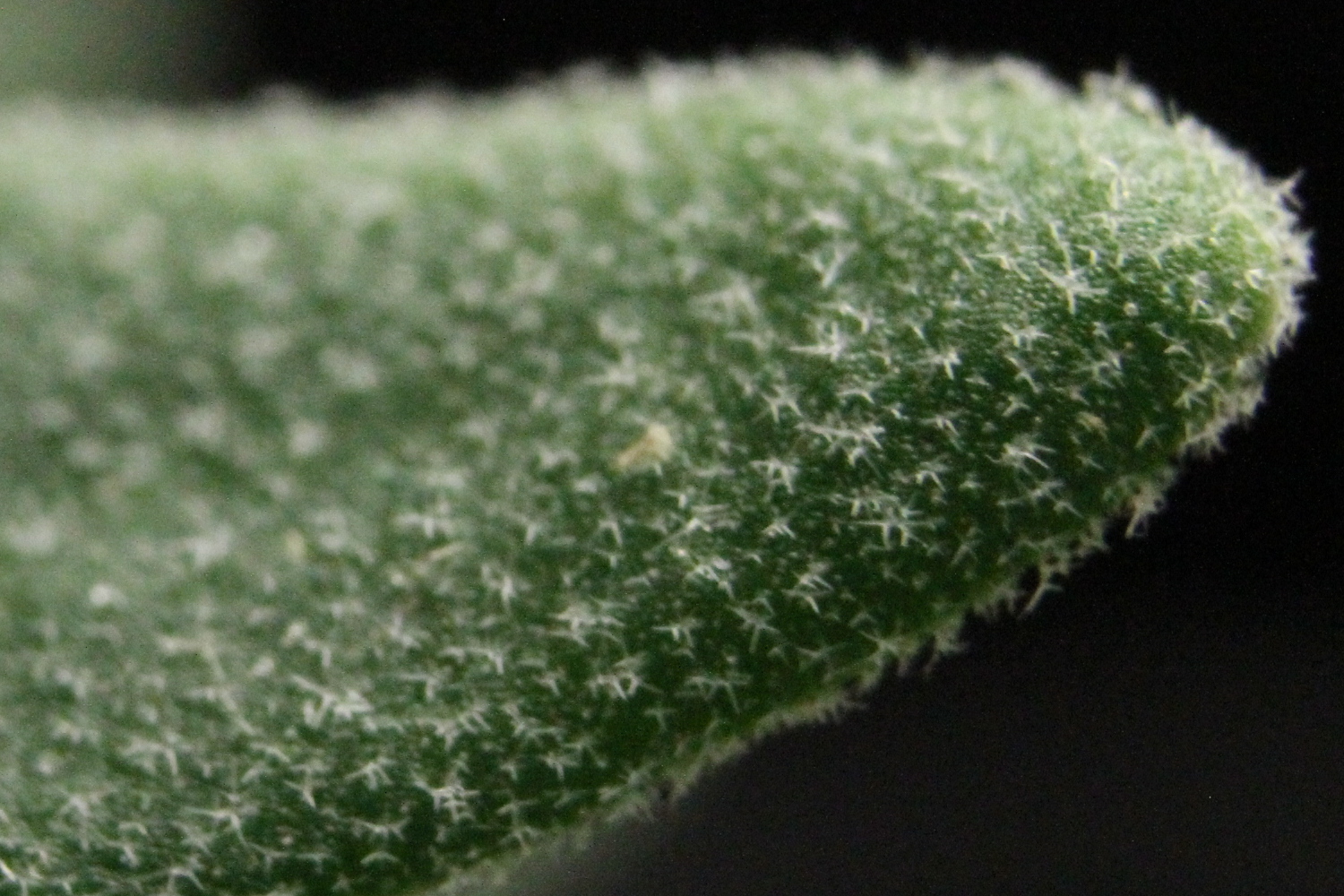
I also like that it looks a bit more silvery than the other plants. A very close up view of some leaf tips shows that the second plant has much more prominent and branched trichomes. These photos were taken hand-held. I think I can probably do better and closer with some more technical preparation (tripod, lights, maybe focus stacking, etc.).

Extreme close up of lavender leaf tip, showing tiny branched trichomes on leaf surface.
Lavender #1, leaf tip.
Extreme close up of lavender leaf tip, showing tiny branched trichomes on leaf surface.
Lavender #2, leaf tip.
Extreme close up of lavender leaf tip, showing tiny branched trichomes on leaf surface.
Lavender #3, leaf tip.


What lessons have I learned and how do they impact my longer term goals?

Lavender varieties are propagated clonally, so there's no need for them to be homozygous for various alleles. As a result, lavender seeds would be expected to contain a surprising amount of genetic diversity compared to domesticated plants that are routinely grown from seed. The few plants I've grown have shown variations in ability to prosper in the temperature/water conditions I was growing them in, as well as having height and trichome differences.

I have no reason not to expect variations in cold hardiness will also be manifest when I grow out a larger population, though I don't expect one of these three to be a winner in that regard. I'm also looking forward to what other interesting traits may turn up.

The next steps are to acquire a larger number of seeds, grow more seedlings, then plant them out for winter. For initial hardiness trials, I can have many small plants in my back yard. If I find survivors, I'd want to collect seeds and begin the cycle again. Later I can plant seedlings or cuttings at a family property further north. Ideally, I would eventually find trial space in the far north of Minnesota, so the plants can be tested against the coldest that Minnesota winters can provide. That would be several years out, so I have some time yet to make arrangements if things develop such that they would be useful.


Why?

Funny you should ask. In the medium-term, I'm simply motivated by the desire to play around with the plant and produce something I can grow in my yard without having to spend too much effort at keeping it alive. In the long-term, I want to produce varieties that can be farmed for fragrance production in Minnesota. (All current lavender farms in USA are a few growing zones warmer than is available here.) This would open up a new crop for local agriculture and help to diversify what is grown in the state. I don't know if this will come to pass, but that's the thing about long-term goals.


References:

Thursday, October 24, 2019

Botanizing in Alaska: Black Spruce

Cluster of narrow black spruce trees growing alongside a road.
Black spruce (Picea mariana) are a common forest tree up in central Alaska, ranging north until the tundra. The trees in the image at left are in Fairbanks, Alaska.

The trees grow slowly, eventually topping out at 20 meters in the southern parts of their range. The trees in Fairbanks are generally much shorter. The trees here are maybe 30 ft tall, growing less than a foot apart. They can get away with such crowding because those two trees are probably separate trunks growing from a unified root system. Large connecting roots grow horizontally just under the surface and graft together with their neighbors. The individual trunks share nutrients and carbohydrates and thus don't suffer from competitive shading as much as trees that don't cooperate in this manner.

This style of growth also potentially helps them stay upright in the swampy soils they're usually found in. The horizontal grafted root structure spans wider than the cluster of trunks, allowing the cluster to stay upright even if the ground beneath part of the cluster can't support their weight. This style of growth would help them grow horizontally out onto a bog, with some trees suspended over the lake hidden below.

References:

Monday, December 31, 2018

Biology of Fire


Fire is a part of the natural world. Like everything else in the natural world, living systems have evolved to survive, use, or even require fire. We may have a special relationship with fire, but we're not the only ones with an important relationship with fire. When it's in our control, we see it as a constructive force. When it's out of our control, we see it as a destructive force. And rightfully so, because it's both.


View from above of neighborhood after a wildfire as burned through. Buildings are burned to ground, but taller coniferous trees remain intact.
Cropped from image at article.
The recent Camp Fire in California was dramatically destructive, turning much of the community of Paradise into ash. The scale and speed of the destruction was greater than anything in living memory. Over a pair of days, the fire jumped from one building to the next like a living thing. It raced throughout the city, destroying everything as it went. Thousands of people were displaced. There are numerous harrowing tales of narrow escape. Far too many people suffered horrific deaths. In another place and another time, the stories would be handed down through the ages until they became epic sagas.

The trees didn't notice.


The trees remaining standing among all the destruction led some to believe in conspiracy theories. That the buildings were intentionally burned down. That the horrors and escapes were all fiction. That some hidden government agency murdered all those who died. How could all those buildings have burned and missed burning the trees?

Animals can run or hide. Plants have to deal with what comes there way. So. How did they do it?

The trees that so clearly survived this horrific fire had evolved in an environment that included fire. They have thick fire-resistant bark and they shed their lower branches once they get tall enough. They're adapted to survive the sort of ground fire that destroyed Paradise-CA. (Well, the adults are adapted to survive. Any juvenile trees would have been taken out, but the adults will make more.) The structures we built there were not adapted to survive such a fire. Maybe in the future we'll have building codes appropriate to environments where such fires are possible.


So. The trees are adapted to survive fire. Do any plants -use- fire?

I'd have to travel a bit to see a really good example of this. In Australia there is a type of grass in the genus Triodia that is called Spinifex. (There is a different genus of grass with the name Spinifex, so... I got nothing.) During the dry season the grass become so incredibly flammable that it is almost guaranteed that any large area of the grass will burn every few years. The fires burn hot enough to kill off trees and many other plants. The Spinifex survives and readily regrows from underground stems and seeds resting in the soil. Effectively, the grass uses fire to kill off its competition.

Many other grasses seem to have adapted to use this strategy to greater or lesser degrees, but the evidence isn't always so clear-cut.


Ok. The trees survive fire. The grass uses fire. Do any plants -need- fire?

Another tree, the Jack Pine, often definitely needs fire. Its cones are gummed up with so much hard resin that they can't open to release their seeds until they've been burned by a fast, hot fire. After a fire the seeds are able to rapidly germinate into an environment with much less competition. As well, with the reduced level of fuel, the seedlings will likely be protected from another fire until they're large enough to survive it like the adults do. Without fire, the Jack Pine (and other species with serotinous cones/fruit) cannot reproduce. In the absence of some helpful humans who might crack open the cones with power tools, the trees absolutely need fire.


There are numerous fire-adapted ecosystems around the world, with amazing and diverse species that survive, use, and/or need fire for their continued existence. Though plants can't get out of the way of a fire, they're not the only ones with such intricate relationships with it. Animals and fungi deal with fire too. Those sound like later blog posts. Stay tuned.


References:

Monday, December 24, 2018

Mathematical Recreations : Ramanujan's Nested Radical 4

I've previously discussed an interesting math problem posed by Srinivasa Ramanujan way back in 1911.

Over the last three posts on the topic, I've explored my thoughts about this problem and then proved there are an infinite number of valid solutions (any value greater than three).

Since then I've been trying to figure out how to prove all values less than three are not valid solutions. I haven't figured out how to do this yet, but I have figured out how to prove a subset of values are not valid solutions. Any trajectory which reaches zero will then pass to less than zero and be invalid. I might formalize this statement once I've figured out if it can help me finish the overall solution. It might just be a blind alley...


I haven't found anyone else working this problem in the way I have been. The closest I've found has been some comments below a YouTube video where a user talked about calculating through trajectories like I have been. They didn't suggest any sort of general solution to the problem, however.

I did find a mathematical paper using Ramanujan's solution to the problem as part of the title. The authors and reviewers of the paper assumed Ramanujan was correct and didn't test their assumption. I'm considering writing them a letter...


References:

Monday, December 17, 2018

Seed Banks

The largest seed collections are multi-national affairs, backing up national seed collections for large numbers of crop varieties and wild species.
Svalbard Global Seed Vault. The Svalbard global seed vault is designed as a backup for national seed banks. It protects crop biodiversity against regional (and potential global) catastrophes of natural or man-made origin. The facility is protected from many problems that can impact national seed banks by its extreme isolation. Dug into a mountain on an island well north of the Arctic circle, the extreme persistent cold helps to preserve the seeds stored there even with complete power failure. Nations retain ownership of the seeds they store in the global vault. After some event has damaged their local seed banks (or whenever they choose), they can request their seeds back from the vault. Nobody else is given access to the seeds unless the owning nation allows it.
Millennium Seed Bank Partnership. This organization has the goal of banking seeds from 25% of the world's bankable wild species. (Some plant species produce seeds that can't be preserved in a dry state. These have to be preserved through active growth instead of banking.) They focus on species from mountain, dryland, coastal, and island environments that are the most vulnerable to climate change. They also focus on wild relatives of crop species. Their seed collection is used for research, for conservation/restoration projects, and as a back-up for local seed banks (much like Svalbard).
Their overall goal is preservation. Stored crop varieties and species will be maintained (usually in cold storage) in their current form, skipping through time without experiencing any evolutionary changes.


On a smaller scale are local seed lending libraries. Such a library operates by providing seed to members of their local community at the start of the year, then receiving seeds back from those gardeners (that had success) for distribution in the next year. Some growers will ensure their plants are isolated and produce "pure" selfed seed to return to the library. Other growers won't realize they might need to do anything and will occasionally produce hybridized seed to return to the library. Over the scale of many years, the plants that grow from these seeds will be continuously changing. They will be adapting to the local environment and the tastes/favors of the growers contributing seeds back to the library.

Though such a localized variety may have always had the (hypothetical) name "Tomato Alpha", it will be a distinct variety from the "Tomato Alpha" that has been preserved in the seed banks. The common name being applied to what have become multiple different localized varieties will lead to confusion that makes it difficult for people to know what seeds they've received. (This sort of confusion is now seen in tomatoes called "Brandywine".)

Seed lending libraries can't effectively keep an eye out for hybrids (or mistaken identity) in their seeds (nor should they, as this is necessary for developing localized varieties), but they can minimize confusion by ensuring their name is attached to every seed they distribute. "Tomato Alpha, library #1 strain" will be distinct from "Tomato Alpha, library #2 strain" or "Tomato Alpha" (from a seed bank).


Part of my seed-saving philosophy says it is very important for people to save seeds from the plants they grow because it will put incorporate their goals and desires into the future of the plant. This is well captured by the seed lending libraries. I also appreciate the importance of preserving varieties the way the seed banks do because it maintains genetic diversity which can otherwise be easily lost. So, what should we do about the issue of single names coming to refer to multiple varieties?

My personal seed library includes seeds from a variety of sources. I record the variety names for seed that I buy and I'll continue to use the name for seeds I've saved as long as the plants match what the variety is supposed to be. I actively look for hybrids in my garden. If they're interesting, I'll save seeds from them, and then from some of their progeny (etc.). None of these seeds belong to the starting variety, so they get labeled with a description of what the mother plant looked like (since I don't know the daddy) as well as if I know they're F1, F2, etc. Eventually over a several seasons I'll get a better idea of what I want them to be. At the same time their genetics will be stabilizing as they get a better idea of what they want themselves to be. Eventually we'll come to some sort of agreement. I might give them a name at that point, or I might just wait until they tell me what their name is. It might take a while.


References: